A branded polo that fits one employee perfectly can feel too tight, too long, or too boxy on another. That is why a corporate apparel sizing guide is more than a chart on a product page. It is the process that helps you order team apparel people will actually wear, while avoiding costly reorders, exchanges, and unhappy employees.
For small and mid-sized businesses, apparel is often used at job sites, client meetings, trade shows, company events, and in daily customer-facing roles. It needs to look professional, support the work being done, and fit a real range of body types. The goal is not simply to put a logo on a shirt. The goal is to make your team look credible and feel comfortable representing your brand.
Start With the Garment, Not the Size Label
A medium is not a universal measurement. Sizing changes by manufacturer, garment style, fabric blend, and intended fit. A unisex performance polo, a women’s fitted polo, and a heavyweight work shirt may all carry a medium label while fitting very differently.
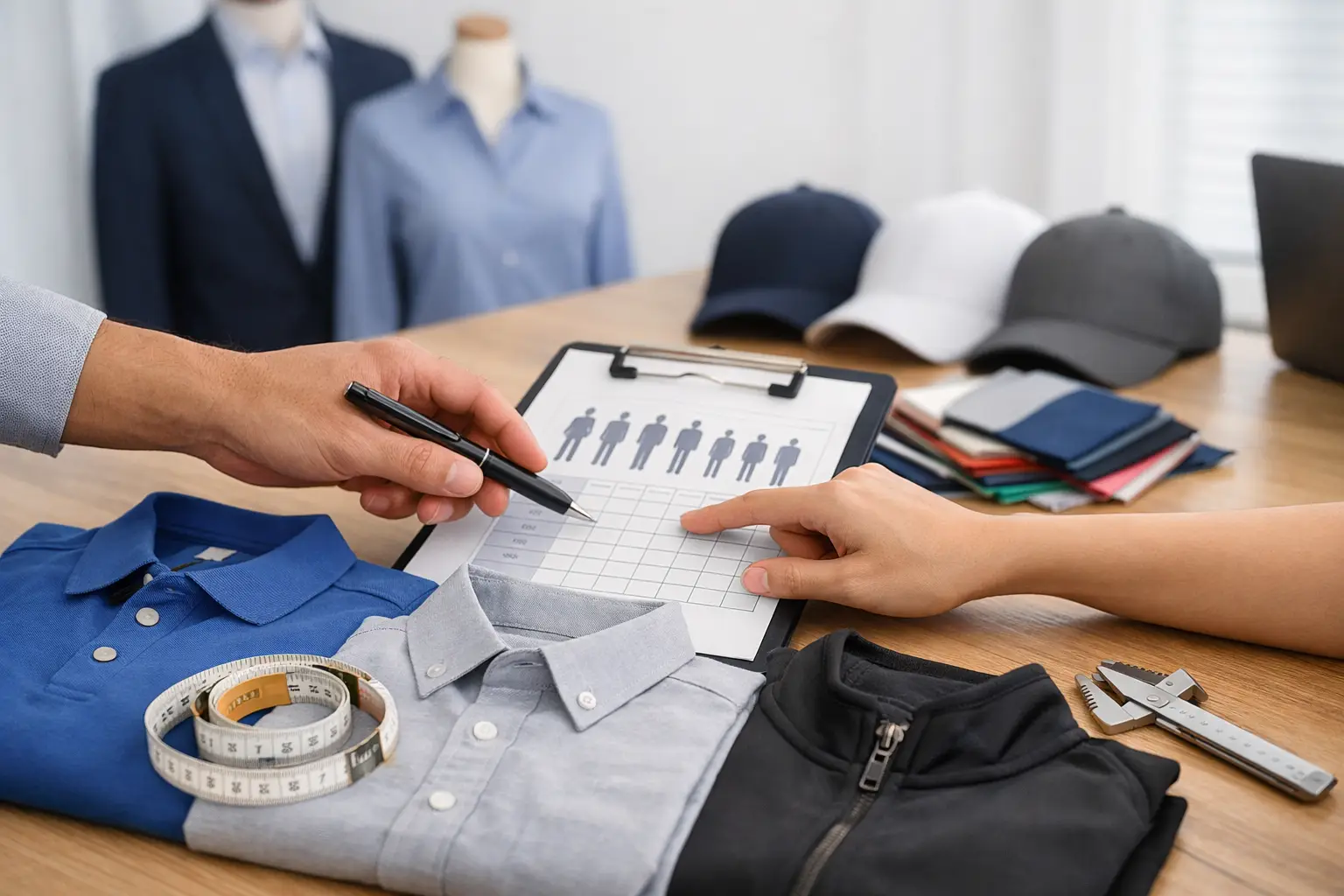
Before collecting sizes, choose the actual garment or narrow the selection to two or three approved options. Then use that product’s manufacturer size chart. Ask employees to compare their measurements to the chart rather than choosing what they usually wear at a retail store.
This one step eliminates a common ordering mistake: treating a size label as a standard. It is not. Chest, waist, hip, body length, sleeve length, and neck measurements are more useful than the letter or number printed on the tag.
Understand the Fit Category
Most corporate apparel falls into a few broad fit categories. Traditional or classic fit garments leave more room through the chest and torso. They are often a dependable choice for uniforms, field teams, and mixed-size groups. Modern or retail fit styles are more tailored and can create a polished appearance, but they may feel restrictive for active roles or employees who prefer extra room.
Athletic and performance apparel is designed for movement and moisture management. It works well for outdoor crews, event staff, fitness teams, and active workplaces, although lightweight fabric can reveal a closer fit than a heavier cotton blend. Women’s cut garments may provide a more shaped silhouette, while unisex cuts generally offer a straighter, roomier profile.
Neither option is automatically better. Match the fit to the job, the setting, and the people wearing it. A sharp-looking shirt that stays in a closet does not help your brand.
Corporate Apparel Sizing Guide: Measure What Matters
The most reliable approach is to provide measurement instructions with the size chart. Employees do not need a full tailoring session, but they do need clear guidance.
For tops, chest or bust is usually the primary measurement. Measure around the fullest part of the chest, keeping the tape level and comfortably loose. Waist and hip measurements matter more for fitted shirts, jackets, vests, and women’s styles. For pants and shorts, use the waist and inseam specified by the garment manufacturer.
When a person falls between sizes, the right answer depends on the garment and use case. For a fitted button-down intended for client presentations, sizing up may improve comfort without looking oversized. For a loose fleece jacket worn over layers, sizing up is usually the safer choice. For a performance shirt with stretch, the closer size may work well if the employee prefers a more tailored fit.
A few practical reminders prevent confusion:
- Measure over light clothing, not bulky layers.
- Use a flexible measuring tape and keep it level.
- Compare body measurements to the chart, not measurements from a favorite old shirt.
- Consider whether the garment will be worn alone, over a base layer, or over regular work clothes.
If you are measuring a garment instead of a person, lay it flat and follow the supplier’s garment-measurement method. A flat chest width, for example, is often measured from underarm to underarm and then doubled. Do not assume it matches a body measurement exactly. Garment ease, or extra room built into the design, affects the final fit.
Make Size Collection Simple for Your Team
Size collection becomes messy when employees receive a vague request such as, “Send me your shirt size.” The better method is to send a short order form that identifies the exact item, fit type, available sizes, color, and a link or attachment for the relevant chart. Since every item can fit differently, collect a size for each garment instead of assuming one size works across polos, jackets, and quarter-zips.
Give employees a clear deadline and explain that their selection is based on the provided chart. This keeps the project moving and reduces last-minute changes after production begins.
For larger orders, bring in sample sizes or create a fitting day. This is especially valuable for uniforms, embroidered outerwear, and garments with a higher per-piece cost. Employees can try on the actual style, confirm their preferred fit, and note whether they want room for layering. A sample round may take extra coordination upfront, but it can save more time and money than processing a wave of exchanges later.
If samples are not available, order a small test run for a representative group. Include employees with different body types and job functions. Their feedback can reveal issues that a size chart alone will not catch, such as short sleeves, restrictive shoulders, thin fabric, or a jacket that feels too bulky for driving.
Plan for Inclusive, Professional Team Apparel
A professional uniform program should give employees practical options without making anyone feel like an exception. Offer the widest reasonable size range from the start. If a garment is only available in a narrow range, it may not be the right choice for the whole team.
Consider offering equivalent options rather than forcing every employee into one cut. For example, a unisex polo and a women’s polo in the same color and decoration style can maintain brand consistency while giving people a better fit choice. The same approach can work for jackets, button-downs, and performance layers.
Keep the logo placement, thread color, print size, and garment color consistent across those options. That protects the visual standard while respecting comfort and preference.
Also think about the work environment. A restaurant team may need easy-care shirts that allow movement through a shift. A construction or service crew may need durable layers that fit over workwear. A real estate team may prioritize polished, lightweight pieces for open houses and networking events. Sizing decisions should support the way apparel will be used, not just how it looks in a catalog photo.
Factor Decoration Into the Fit Decision
Embroidery, screen printing, patches, and heat-applied graphics can affect how a garment feels. A dense embroidered logo on a thin polo may create stiffness around the chest. A large back print can reduce breathability in warm conditions. Structured jackets and stretch fabrics may require specific decoration methods to preserve the garment’s shape and performance.
This does not mean avoiding branded apparel. It means choosing the garment and decoration together. If comfort is the priority, a softer performance polo with a properly sized left-chest logo may outperform a heavier shirt with oversized embroidery. If durability is the priority, a workwear shirt with a patch or direct embroidery may be the better investment.
Ask your apparel partner to review the intended logo size and placement before production. A design that looks great on an adult large can look oversized on an extra-small garment. Adjusting decoration proportion by garment size is sometimes worth considering, particularly for premium uniforms or customer-facing teams.
Avoid the Reorder Problems That Cost the Most
The most expensive apparel problems are usually preventable. Ordering too few extended sizes, skipping the approval process, or selecting a garment based only on price can create a costly second order. A low-cost shirt is not a bargain if half the team finds it uncomfortable.
Build a small overage into standard sizes when appropriate, especially if you hire frequently or need extra shirts for events. Keep a record of the garment brand, style number, color, decoration method, logo placement, and sizing feedback. When it is time to reorder, you will not have to start from scratch or guess which version the team preferred.
It also helps to separate stock apparel from special-order pieces. Keeping a few common polos or tees on hand supports new hires and last-minute events. More customized items, such as embroidered jackets or fitted button-downs, can be ordered after individual sizing is confirmed.
The right apparel program makes your team easier to recognize and your brand easier to remember. Start with a garment that fits the work, give people a clear way to choose their size, and treat the first order as a system you can improve. A little planning before production keeps your team comfortable, your logo visible, and your next order far less complicated.