A weak logo creates expensive problems. It shows up on your business cards, your website header, your storefront sign, your truck wrap, your shirts, and your trade show booth – and every inconsistency chips away at credibility. That is why custom logo design for small business is not just a creative task. It is a business decision that affects how professional, memorable, and organized your company looks everywhere customers see you.
For small and mid-sized businesses, the logo is rarely the end goal. It is the starting point for everything that follows. If the mark is hard to read, too trendy, poorly sized, or built without real-world use in mind, it creates headaches across print, digital, and promotional materials. Fixing those problems later usually costs more than getting it right from the start.
Why custom logo design for small business matters
Your logo does three jobs at once. It identifies your company, supports your positioning, and sets the tone for the rest of your brand. A law office, home builder, lender, medical practice, local contractor, and B2B service firm should not all look the same. Yet many small businesses end up with generic marks that could belong to anyone.
That is the risk of using cheap templates or rushed design. A logo may look decent on a screen, then fall apart when printed small on a business card or enlarged on a banner. Colors can shift. Details disappear. Fonts may not reproduce well. The design that seemed like a quick win turns into a production issue every time you order marketing materials.
A custom approach solves that by building the logo around your actual business. That includes your audience, your industry, where the logo will appear, and how it needs to perform over time. A strong logo is not only attractive. It is usable, scalable, and clear in real business situations.
What a good small business logo actually needs to do
A lot of business owners assume a logo just needs to look modern. That is only part of the equation. A logo should also be easy to recognize, easy to reproduce, and flexible enough to work across platforms.
If your logo depends on tiny details, gradients, or effects that only work on a dark background, you will run into issues fast. The same goes for marks that look trendy today but feel dated a year from now. Small businesses usually need a logo to last through website updates, print runs, apparel orders, vehicle graphics, signage, and promotional products. It has to work hard.
That means the best logo is not always the most elaborate one. In many cases, a clean and distinctive design will outperform something overly clever. Simplicity tends to hold up better across formats, especially when your brand needs to move smoothly from digital use to physical production.
Custom logo design for small business is about more than the logo
A logo never lives alone. Once it is approved, it starts appearing on postcards, sales sheets, storefronts, uniforms, social graphics, packaging, and presentation materials. If those pieces are being created by different vendors with no shared standards, the brand starts to drift.
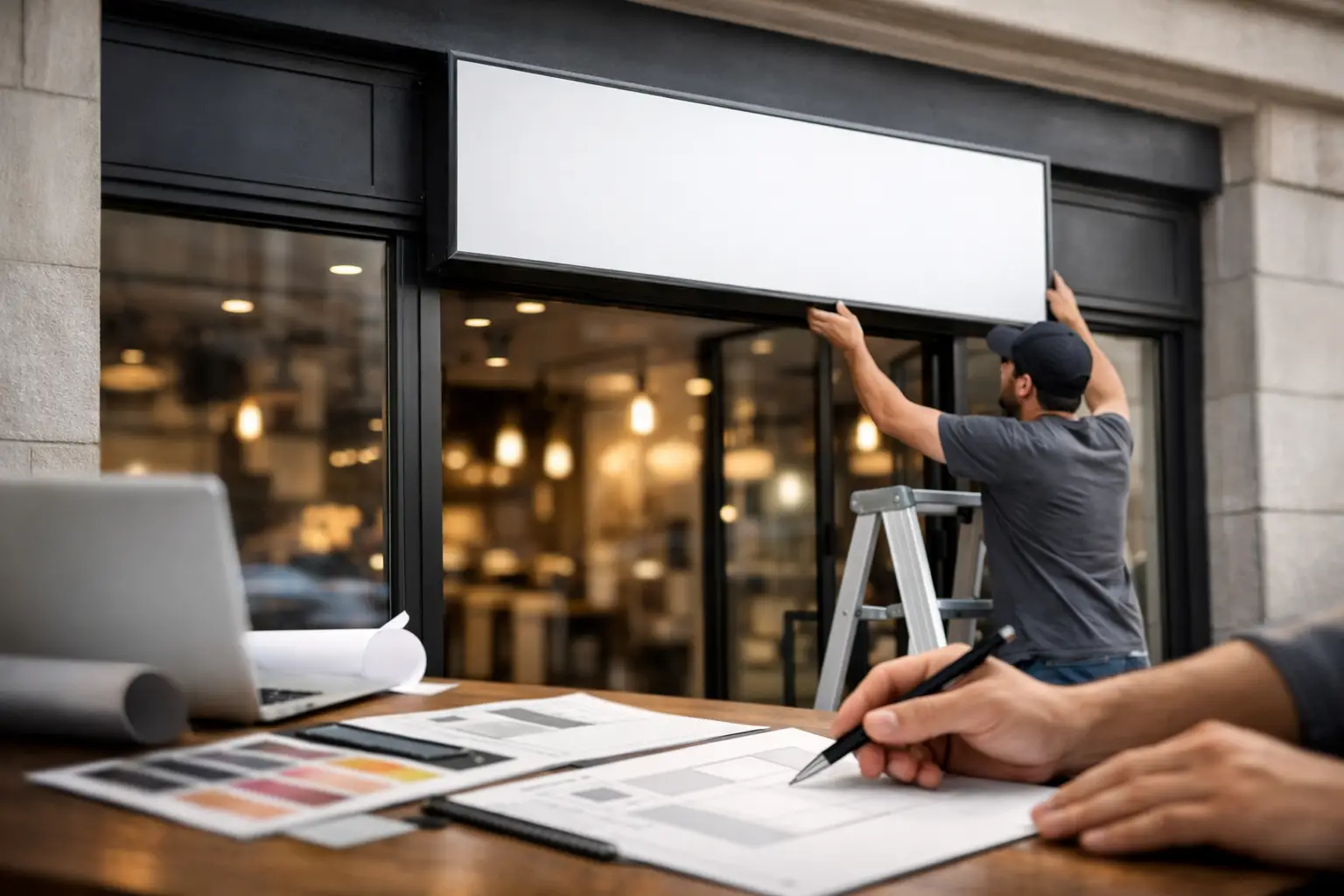
That is where many businesses lose time and money. They approve one logo, then hand it off to a web person, a printer, a sign shop, and a promotional products vendor. Each one interprets it differently. Colors vary. Spacing changes. File issues pop up. What should have been a clean brand rollout turns into a patchwork.
A better process connects logo design to execution. When the logo is created with print, digital, and promotional use in mind, it becomes much easier to keep your brand consistent. That consistency matters because customers notice when things feel off, even if they cannot explain why. Consistency signals professionalism. It tells people your business is established, organized, and dependable.
How the right logo reduces marketing friction
Good branding should make your marketing easier, not harder. A custom logo can reduce friction in ways that business owners often do not expect.
First, it cuts down on revisions. When the design is built properly from the start, you are not constantly asking vendors to fix sizing, redraw low-resolution files, or create emergency versions for different uses. Second, it speeds up production. Clear brand files and standards help every project move faster, whether you are ordering shirts or launching a landing page. Third, it improves decision-making. Once the logo and visual direction are solid, future marketing pieces have a clear reference point.
This is one reason integrated branding support matters. A logo designed in isolation may win approval in a vacuum, but a logo designed with full business use in mind tends to perform better where it counts.
What to expect from a professional logo design process
A solid process should feel collaborative, not confusing. You should not have to guess what the designer is doing or whether the final files will actually work for your business.
The process usually starts with understanding your company, audience, and goals. A restaurant needs a different visual strategy than a construction firm. A personal brand has different requirements than a regional service provider with trucks, signage, uniforms, and sales materials. Good design starts by asking practical questions, not just aesthetic ones.
From there, concept development should be focused and intentional. You want options, but not random ones. The strongest concepts reflect your market position and consider where the logo will be used most. A logo that looks great on a website but fails on embroidery is not a complete solution.
Refinement matters just as much. Small adjustments to spacing, type, icon shape, or color can make a major difference in readability and polish. That attention to detail is often what separates a logo that feels generic from one that feels established.
Finally, the handoff needs to be complete. Businesses should receive usable file formats and practical guidance for applying the logo correctly. Without that, even a good design can become difficult to manage.
Common mistakes small businesses make
The most common mistake is treating logo design like a one-time purchase instead of a foundation. When the lowest price becomes the only priority, businesses often get a design that creates more cost later.
Another mistake is designing by committee. Feedback is helpful, but too many opinions can push the logo toward the safest and most forgettable option. Strong branding needs direction. It should reflect business goals, not just personal taste.
There is also the issue of chasing trends. Minimal logos, handwritten logos, badge logos, and abstract logos all have their place. But choosing a style just because it is popular can backfire if it does not match your audience or service offering. A logo should fit your business first.
Some companies also underestimate how many versions they will need. Horizontal, stacked, icon-only, black-and-white, and reversed versions are not extras. They are often necessary for real-world use. If those are not planned for early, you may end up improvising later.
When it is time to redesign your logo
Not every business needs a full rebrand. Sometimes a logo refresh is enough. Other times, the current logo is actively holding the company back.
If your logo looks outdated, does not reproduce well, feels inconsistent with your current market position, or creates problems across materials, it may be time to revisit it. The same goes if your company has grown beyond its original identity. A startup logo made for a basic website may not support a more established business with signage, apparel, trade show displays, and sales collateral.
The right move depends on what is broken. If recognition is strong, a careful update may preserve brand equity while improving usability. If the mark never fit the business in the first place, a more complete redesign could make more sense.
The real value of getting it right
Custom logo design for small business pays off when it supports the bigger picture. A strong logo helps your business look credible from the first impression. It gives your marketing materials a consistent center. It reduces avoidable mistakes. And it makes every future piece – from a business card to a website to branded merchandise – easier to produce and more effective.
For businesses that need practical results, that matters. You are not investing in a logo so it can sit in a folder. You are investing in a visual identity that has to show up correctly, consistently, and professionally in the places where customers make decisions.
That is why the smartest logo projects are built with execution in mind. At Echo Brand Geeks, that means thinking beyond the mark itself and making sure it works across the real materials your business uses to sell, promote, and grow. A good logo should not create more work. It should make the rest of your marketing easier to manage and a lot more effective.
If your current logo is causing confusion, inconsistency, or extra production headaches, that is usually your sign. The right design does more than look better. It helps your business show up like it means business.