A lot of business owners ask about custom website vs template website right after they get pricing. That makes sense. On the surface, both can put your business online. The real question is what you need the site to do after launch – bring in leads, support sales, match your brand, and stay useful as your business grows.
If you are comparing the two, the wrong choice is usually not about design taste. It is about fit. A template website can be a smart move for some businesses. A custom website can be the better long-term investment for others. The best option depends on your goals, timeline, budget, and how much flexibility your marketing actually needs.
Custom website vs template website: what is the difference?
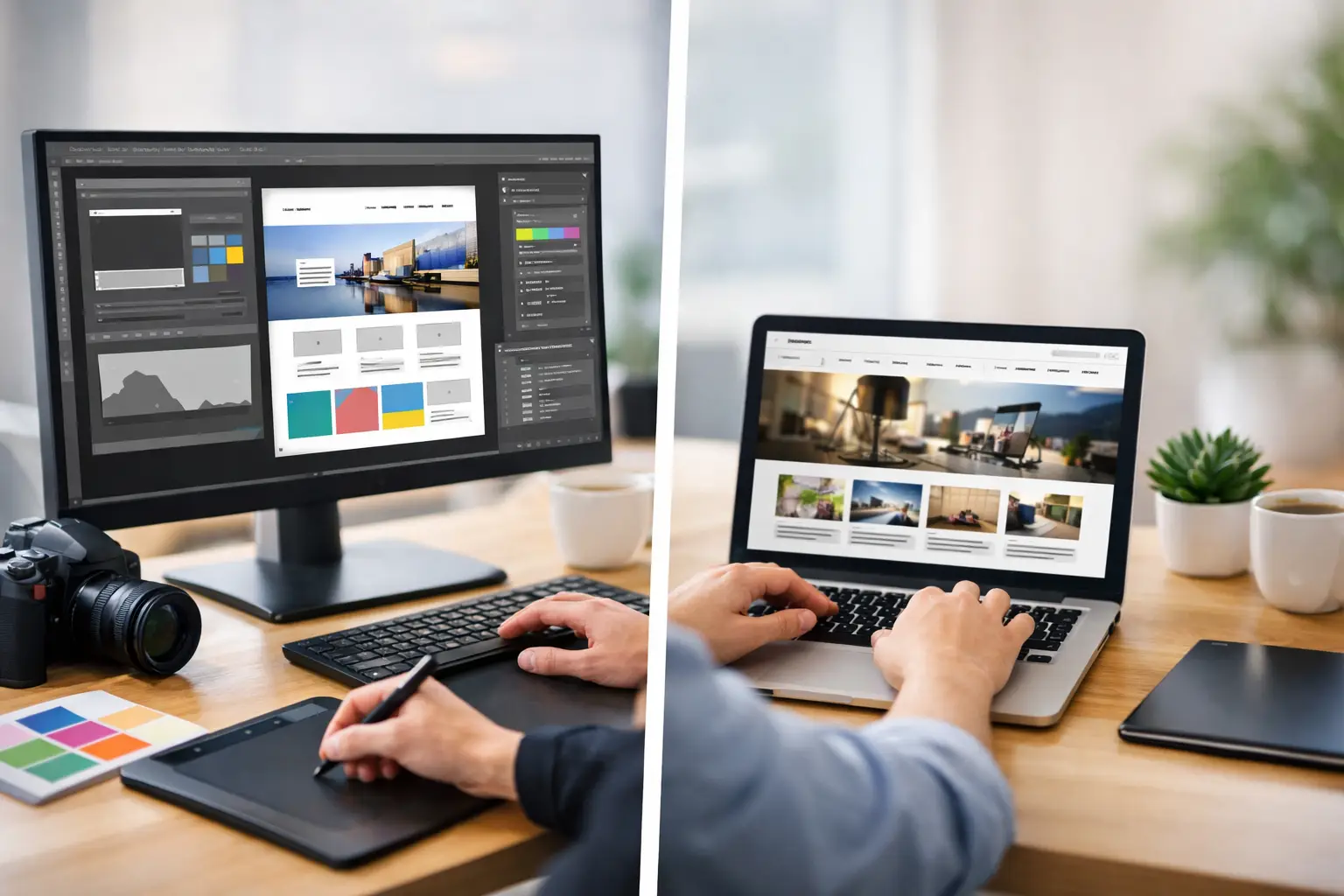
A template website starts with a pre-built layout. You choose a design framework, swap in your logo, colors, photos, and content, and publish it with limited structural changes. It is faster because much of the design and development work has already been done.
A custom website is built around your business from the ground up. That does not always mean every line of code is written from scratch, but it does mean the layout, user experience, brand presentation, and functionality are created to support your specific goals.
That distinction matters more than many business owners realize. A template gives you a starting point. A custom website gives you a tailored tool.
When a template website makes sense
There is nothing wrong with a template website when the project is simple and the expectations are realistic. If you are a newer business, need a basic online presence quickly, or just want a clean site with a few pages, a template can do the job.
For example, a local service company that needs a home page, service overview, contact form, and gallery may not need a highly complex build on day one. If speed matters more than customization, a template can help you launch without a long development process.
Templates also work well when the website is not the center of your sales process. If most of your business comes from referrals, repeat clients, or direct outreach, a lower-cost site may be enough for credibility.
The trade-off is that you are working within someone else’s structure. You can adjust colors, fonts, and content, but deeper changes often get expensive or messy fast.
When a custom website is the better fit
A custom website makes more sense when your site needs to do real business work. That includes generating leads, supporting SEO, handling custom forms, integrating with business systems, selling online, or presenting a strong and distinct brand.
It is also the better option when your business has outgrown generic marketing. If your printed materials look polished, your signage is consistent, and your sales team presents a professional image, a cookie-cutter site can quickly become the weak link.
For companies investing in broader branding, custom web design helps everything stay aligned. Your website should not feel disconnected from your brochures, trade show graphics, postcards, business cards, or digital campaigns. Consistency builds trust, and trust helps conversion.
Brand impact is often the deciding factor
Many template websites look fine at first glance. The problem is that fine is not always persuasive.
Small and mid-sized businesses often compete in crowded local or regional markets. If your website looks like ten others in your industry, it becomes harder for prospects to remember you. A custom build gives you more control over how your business is positioned, how your message is presented, and how users move through the site.
That matters for professional service firms, contractors, real estate teams, lenders, developers, and B2B companies that need credibility. People make quick judgments online. If the website feels generic, they may assume the business is generic too.
A strong custom site helps you communicate that you are established, organized, and worth contacting. It adds credibility to your business without forcing visitors to work to understand who you are.
Cost is not as simple as cheap vs expensive
This is where many comparisons go sideways. Template websites usually cost less upfront. Custom websites usually cost more upfront. That part is true.
But the better question is total value over time. A low-cost template can become expensive if it limits your growth, creates branding inconsistency, or needs repeated workarounds. If you have to rebuild in a year because the site no longer fits your business, the original savings disappear quickly.
Custom websites typically cost more because they involve strategy, design decisions, content structure, functionality planning, and development tailored to your goals. You are paying for a site built to support your business, not just fill space online.
That does not mean every company should start with custom. It means budget should be weighed against business impact. A site that helps close more leads, supports stronger search visibility, and reduces future rework can be the more practical investment.
Flexibility and growth matter more than most businesses expect
A website is rarely static for long. Services change. Teams grow. Marketing campaigns evolve. You may add landing pages, location pages, resource sections, product lines, or integrations later.
With a template website, expansion can become difficult if the original structure was not built for it. You may run into layout limitations, plugin conflicts, slow performance, or pages that feel stitched together rather than intentional.
A custom website gives you more room to plan ahead. It can be structured around your actual sales process, service categories, customer journey, and future marketing needs. That means fewer headaches when it is time to scale.
For businesses managing multiple marketing pieces at once, this flexibility is especially valuable. Your website should work with your overall brand system, not fight it.
Performance, SEO, and user experience
Template websites can perform well, but they often come with extra code, unnecessary features, and design elements you do not need. That can affect speed and user experience.
Custom websites give you more control over page structure, calls to action, content hierarchy, and technical performance. That can support better SEO and stronger conversion paths, especially if the site is being built around targeted services and local search opportunities.
This is not just a technical issue. It affects sales. If visitors cannot quickly understand what you do, who you serve, and how to contact you, the website is not doing its job.
A custom approach lets you remove distractions and build around business outcomes. Every section can have a purpose. Every page can support a next step.
The hidden operational side of the decision
Business owners often compare websites as if they exist in isolation. In reality, your website touches everything else – your brand, your sales materials, your campaigns, your forms, your follow-up, and your credibility.
If you are juggling different vendors for design, print, web, and promotional materials, inconsistency is almost guaranteed. Messaging gets diluted. Files get lost. Mistakes happen. Timelines stretch.
That is one reason many businesses move toward a more coordinated approach. When your website is developed with your broader branding in mind, the result is usually cleaner, faster, and more consistent. Echo Brand Geeks often sees this firsthand: businesses do better when their web presence matches the quality of everything else they put into the market.
So which option should you choose?
Choose a template website if you need to launch quickly, your content is simple, your budget is tight, and your website only needs to establish a basic professional presence.
Choose a custom website if your site is part of your growth strategy, your brand presentation matters, you need flexibility, or you want a stronger foundation for SEO, lead generation, and long-term marketing.
There is no prize for choosing the more expensive option if you do not need it. There is also no benefit in choosing the cheaper option if it creates limitations your business will feel six months from now.
The smartest decision is the one that fits where your business is now and where you want it to go next.
A good website should reduce friction, not add to it. If your business is ready for a site that supports your brand, your marketing, and your sales process with less patchwork and fewer compromises, that is usually a sign to think beyond the template.