
A lot of small business websites fail for a simple reason: they were built to exist, not to perform. They look fine at a glance, but they do not help people trust the company, understand the offer, or take the next step. That is why small business website design services matter so much. A website is not just a digital brochure. It is often the first salesperson, the first impression, and the first proof that your business is credible.
For small to mid-sized businesses, that first impression has to work hard. You are competing with larger companies, tighter timelines, and customers who make fast decisions. If your site is confusing, outdated, or disconnected from the rest of your branding, people notice. They may not tell you why they left, but they leave all the same.
What small business website design services should actually do
Good design is part of the job, but it is not the whole job. A strong website should help your business look established, explain what you do clearly, and guide visitors toward a call, form submission, appointment, or purchase.
That means the service should go beyond choosing colors and arranging sections on a page. It should account for how your customers think, what information they need before they trust you, and what objections might slow them down. For a local contractor, that might mean making services, service areas, and contact options obvious. For a lender or real estate professional, it may mean balancing professionalism with speed, credibility, and easy lead capture.
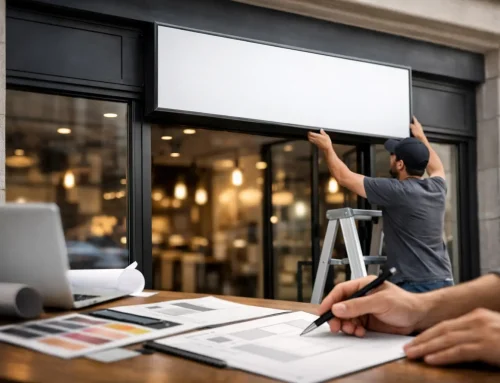
The best small business website design services also consider how the website fits into the rest of your marketing. Your business card, signage, sales sheets, trade show booth, social graphics, and website should not feel like they came from five different companies. When branding is fragmented, trust drops. When it is consistent, your business feels organized and reliable.
Why many small business websites underperform
Small businesses usually do not struggle because they do not care about marketing. They struggle because marketing gets split across too many vendors, too many tools, and too many rushed decisions.
A logo comes from one freelancer. Business cards come from another printer. The website goes to a budget developer. Someone on staff writes copy between other tasks. The result is predictable: mixed messaging, uneven quality, and a site that does not reflect the actual value of the business.
There is also a common trap of designing for personal taste instead of business results. A business owner may prefer a certain style, but if the site buries key information, lacks clear calls to action, or loads poorly on mobile, it is not doing its job. Good website design is not about decoration. It is about making the business easier to understand and easier to choose.
What to look for in small business website design services
Start with clarity. If a provider cannot explain how the site will support leads, sales, credibility, and brand consistency, that is a problem. You want a partner who asks practical questions: What are your most profitable services? Who is the ideal customer? What should visitors do first? What materials already exist that should carry over into the site?
You also want custom thinking, even if the project is not massive. Custom does not always mean expensive or overly complex. It means the website reflects your business instead of looking like a recycled template with your logo dropped in. A small business site should feel built for your market, your offer, and your buyers.
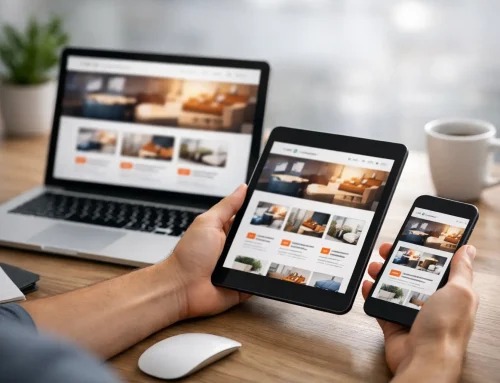
Mobile experience matters just as much as desktop, and in many industries it matters more. If someone finds your business from a search result on their phone, they need fast answers. They should be able to call, request a quote, or get directions without hunting through the page.
Content matters too. Strong visuals help, but words do the heavy lifting when it comes to explaining services and creating trust. If your site says a lot without saying anything specific, visitors will not stick around. Clear service pages, benefit-focused headlines, and useful supporting details make a real difference.
The business case for having one partner handle more than the website
This is where many companies waste time and money without realizing it. A website does not live in isolation. It pulls from your branding, your sales materials, your print collateral, and your broader marketing message.
When one team understands the full picture, projects move faster and mistakes go down. Your website can match your brochures. Your postcards can reinforce the same message as your landing page. Your trade show graphics, custom apparel, signage, and digital presence can all point in the same direction. That kind of consistency is not just nice to have. It makes your business easier to remember and easier to trust.
There is also less back-and-forth. You are not spending hours relaying files, correcting mismatched branding, or explaining your business story to a new vendor every few weeks. For busy owners and lean teams, that operational simplicity matters. It reduces headaches and usually lowers the hidden costs that come from rework.
What a good website process looks like
A useful website project starts with discovery, not design mockups. Before anyone talks about fonts or layouts, there should be a conversation about goals, audience, services, and brand position. If that step gets skipped, the rest of the project usually becomes guesswork.
From there, the structure should be mapped around what customers need to know. Home page, service pages, about page, contact page, and any industry-specific content should all have a purpose. Every page should answer a basic question: why should someone trust this business enough to take action?
Design comes next, but it should support communication rather than distract from it. Clean layout, consistent branding, readable text, strong visual hierarchy, and clear calls to action all matter more than flashy effects. Most small businesses do not need a complicated site. They need a clear one.
Then there is build quality. The site should load reasonably fast, work well on mobile, and make it easy for users to complete the next step. That next step may be a form fill, a phone call, an estimate request, an online order, or a booking. The exact goal depends on the business. The point is that the site should make action easy.
Trade-offs every business owner should understand
Not every company needs a large custom website right away. Sometimes a focused starter site is the smartest move, especially if you need to launch quickly or control costs. A smaller site done well is better than a bloated site full of weak content and unclear navigation.
That said, going too cheap usually creates problems. Low-cost builds often rely on generic templates, thin copy, and minimal strategy. They may look acceptable for a month, then start costing you in weak lead quality, poor branding, and missed opportunities.
There is also a trade-off between speed and refinement. If you need a site live fast for a launch, event, or campaign, some features may need to wait for phase two. That is fine, as long as the foundation is solid. Good partners are upfront about what fits the timeline and what should come later.
Signs your current website is holding you back
If people regularly ask basic questions that should be obvious from your site, that is a red flag. If your branding looks different from page to page or does not match your printed materials, that is another. If the site is hard to update, not mobile-friendly, or weak at turning visitors into leads, it is probably costing you more than you think.
The same goes for websites that feel generic. Small businesses win when they communicate clearly and look credible. If your site could belong to almost any company in your industry, it is not helping you stand out.
Choosing the right partner
The right provider should make the process easier, not more confusing. They should be able to talk about branding, design, messaging, and execution in practical terms. They should understand that business owners are not buying a website for fun. They are buying a tool that needs to support growth.
That is why working with a team like Echo Brand Geeks can make sense for businesses that want more than a one-off design project. When web design is connected to your print materials, signage, promotional products, and overall brand presentation, your marketing gets more consistent and easier to manage.
A good website should make your business easier to trust before you ever pick up the phone. If your current site is not doing that, it may be time for a smarter, more connected approach.