
A new hire’s first few days are full of small signals. Is the company organized? Do people communicate clearly? Will they have what they need to do good work? The best employee welcome kit ideas answer those questions before the first orientation meeting is over.
A welcome kit is not just a box of branded items. It is a practical onboarding tool and a visible extension of your company culture. When every piece looks intentional, works well, and supports the employee’s role, it helps new team members feel prepared instead of overlooked.
Start With a Kit That Has a Job to Do
The goal is not to hand out the most items. The goal is to give employees products they will genuinely use while creating a consistent first impression of your business. A financial firm may prioritize polished desk items and client-ready apparel. A construction company may need durable workwear, safety gear, and a water bottle that can handle job sites. A hybrid team may get more value from home-office tools.
Before choosing products, decide what the kit needs to accomplish. Most welcome kits should do three things: help the employee get started, reinforce the brand, and make them feel like part of the team. If an item does not support one of those outcomes, it may be better left out.
This focus also protects your budget. One useful jacket or quality notebook often creates a stronger impression than a pile of low-value giveaways that end up in a drawer.
Employee Welcome Kit Ideas New Hires Will Use
1. A branded notebook and quality pen
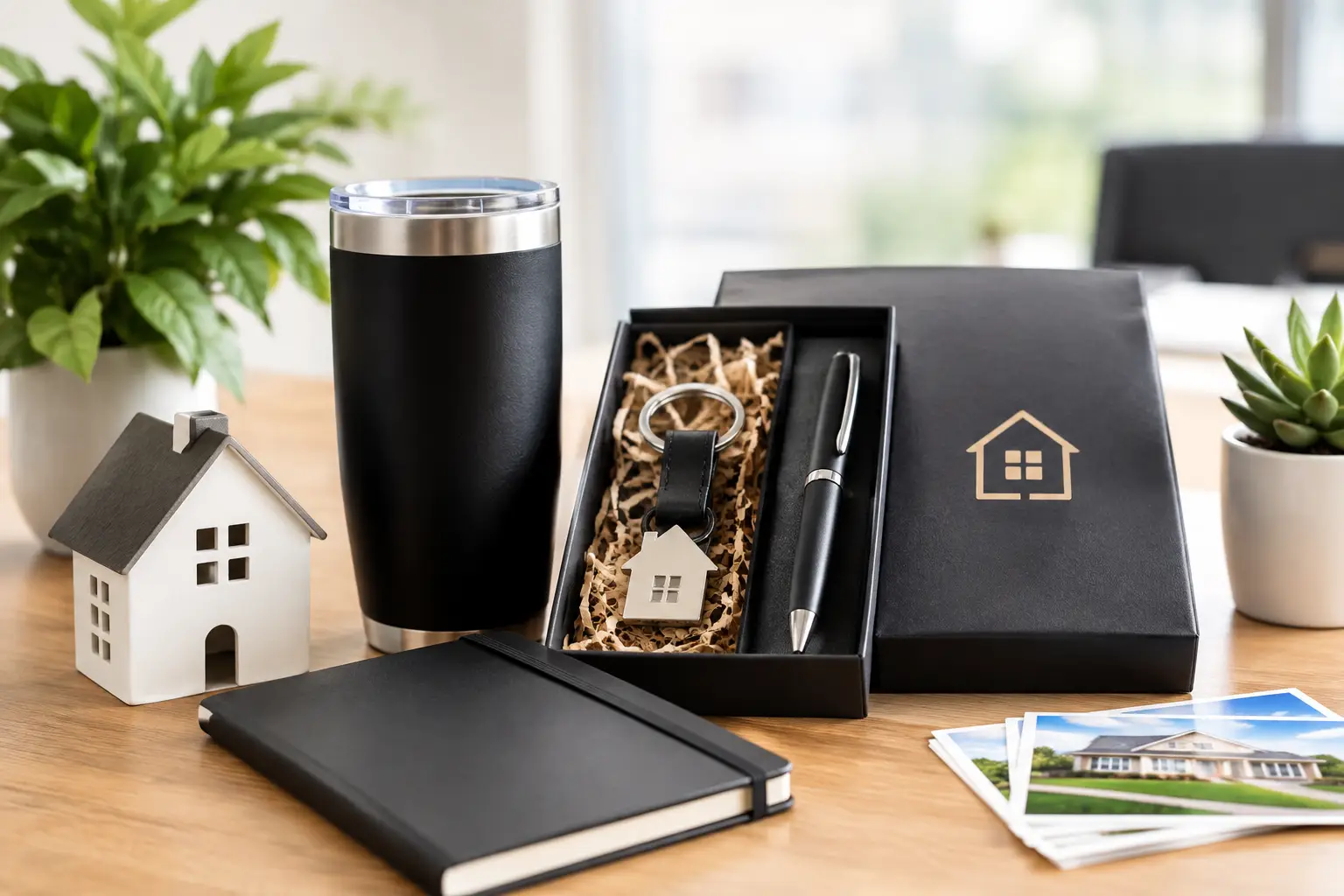
A notebook is simple, but it earns its place in nearly every industry. New employees take notes during training, write down passwords, track goals, and prepare for meetings. Add a clean logo treatment and pair it with a dependable pen that feels substantial in the hand.
For client-facing businesses, this is a small but meaningful credibility detail. It gives employees a professional tool they can carry into meetings from day one.
2. A role-specific quick-start folder
A printed folder or welcome packet can make onboarding feel less chaotic. Include the basics: key contacts, a first-week schedule, company values, technology instructions, benefits reminders, and any role-specific checklists.
Keep it useful and easy to scan. New hires do not need a thick manual full of corporate language. They need clear answers to the questions that slow down their first week.
3. Branded apparel people want to wear
Custom apparel works best when it feels like real clothing, not a uniform someone is required to hide in the back of the closet. A soft T-shirt, quarter-zip, polo, hoodie, or cap can build team pride while increasing brand visibility outside the office.
The right choice depends on your workplace. Polos and lightweight jackets work well for real estate, lending, sales, and professional services. Tees, hats, and hoodies may better fit trades, hospitality, events, or a casual office culture. Offer a few size and style options when possible. Fit matters.
4. A reusable water bottle or insulated tumbler
This is one of the most reliable promotional items because it gets used regularly. It also works for employees in offices, vehicles, remote workspaces, and job sites. Choose a product that fits how your team actually works instead of selecting the trendiest option.
For example, field teams may appreciate a rugged bottle with a secure lid. Office teams may prefer a tumbler that fits a cup holder and keeps coffee warm during a morning commute.
5. A laptop bag, backpack, or desk organizer
These items are more of an investment, but they can be worth it for roles that travel, meet clients, or work across locations. A structured laptop bag adds polish for sales professionals and consultants. A durable backpack may be more practical for technicians, project managers, or younger teams on the move.
For employees who stay primarily at a desk, a branded organizer, mouse pad, or cable management kit can make their workspace feel ready for business.
6. Business cards that match the brand
For employees who interact with prospects, vendors, referral partners, or local customers, business cards should be ready early. A well-designed card does more than share contact information. It signals that the employee represents a company with standards.
Do not treat business cards as an afterthought. Make sure fonts, colors, messaging, and contact details align with your website, signage, printed materials, and apparel. Consistency makes your business more memorable.
Add a Personal Touch Without Making It Complicated
A personalized note from a manager or business owner can be one of the highest-impact parts of a welcome kit. It does not need to be lengthy. A few specific lines about why the person was hired, what the team appreciates about their experience, and where they can go for support will do more than another generic item with a logo.
You can also add a simple team card signed by coworkers. This works especially well when employees are joining a distributed team and may not meet everyone in person right away.
Personalization should be handled carefully at scale. Printing each employee’s name on every item can add cost and production time. A practical approach is to personalize the card, folder, name badge, or apparel tag while keeping the larger branded items consistent. You still get the personal moment without turning every onboarding cycle into a production headache.
Build Kits for Different Work Environments
One standard box does not fit every employee. A strong welcome-kit program uses a core set of items, then adjusts for role and work location.
For office and hybrid employees, the core kit might include a notebook, pen, insulated tumbler, laptop accessory, and company apparel. Remote employees may benefit from a webcam cover, desk mat, ring light, or a small home-office allowance paired with branded essentials.
For field service, construction, delivery, or warehouse teams, prioritize durable gear. Consider high-visibility apparel where appropriate, a quality hat, a work-ready bottle, weather-resistant bag, safety materials, and a clear onboarding folder. These teams notice quickly whether the items they receive are designed for real working conditions.
For client-facing professionals, presentation matters. Add business cards, a portfolio folder, a polished polo or quarter-zip, and a dependable bag for carrying materials. The kit should help the employee show up with confidence at a listing appointment, lender meeting, trade event, or customer visit.
Keep Your Brand Consistent Across Every Item
Welcome kits often fail because each item is ordered from a different supplier with no shared visual plan. The logo is one shade on the shirt, another shade on the bottle, and the printed folder uses a completely different font. Small inconsistencies create a scattered impression, even when each product is decent on its own.
Start with a clear brand standard. Use approved logo files, color values, fonts, and placement rules. Think about how products work together when the kit is opened. A clean, coordinated set looks more professional and makes the company feel established.
This is where working with one branding partner can reduce mistakes. Echo Brand Geeks can help businesses coordinate the design, print materials, apparel, and promotional products so the finished kit feels like one brand, not several rushed orders.
Set a Budget Based on Employee Value
There is no universal price point for a welcome kit. A part-time seasonal employee may need a straightforward starter set, while a new sales leader or long-term hire may justify a more substantial package. The key is to match the spend to the role, expected tenure, and how often the products will be used.
Avoid spending the entire budget on packaging. A custom box can look impressive, but it should not force you to downgrade the items inside. If you have to choose, put more of the budget into useful products and clear onboarding materials. Presentation still matters, but utility creates the longer-lasting impression.
It also helps to order core items in planned quantities rather than scrambling each time someone starts. Keeping a small inventory of approved products can lower rush fees, prevent substitutions, and make onboarding easier for your team.
Make the Delivery Part of the Experience
How a new hire receives the kit matters. For in-person teams, have the kit waiting at their workstation or present it during a welcome meeting. For remote employees, ship it early enough that it arrives before their first day, along with a simple note explaining what is inside.
Do not let the kit replace a real welcome. Pair it with a scheduled check-in, introductions to the team, and a clear plan for the first week. The products support the experience, but people remember whether they felt prepared and included.
A well-planned welcome kit gives your business a simple way to show that details matter. Choose items with a purpose, keep the brand consistent, and build a process your team can repeat without extra stress. New employees will notice the difference before they have even had their first coffee break.