A banner that curls at the corners, fades after a few weeks, or flaps itself apart in the wind does more than waste a print budget. It makes your business look unprepared. This banner material review breaks down the practical differences between vinyl, fabric, and mesh so you can choose a banner that supports your brand, location, and goals.
The right material is not always the most expensive option. A lobby banner has different demands than a construction fence banner, and a weekend event sign should not be specified the same way as a trade show display you plan to use for years. Choosing well upfront helps you avoid reprints, installation problems, and inconsistent brand presentation.
Start With Where the Banner Will Be Used
Before comparing materials, decide what the banner needs to do. Is it hanging indoors under controlled lighting? Will it face direct sun, rain, wind, or road dust? Is it a short-term promotion, or a permanent part of your storefront and sales environment?
Size matters, too. A small banner viewed from a few feet away can use finer details and smaller type. A large roadside or fence banner needs bold messaging, high contrast, and a material that stays readable from a distance. The banner itself is only one part of the project. Mounting method, hardware, graphic design, and viewing distance all affect the finished result.
For many business owners, the most reliable starting point is simple: indoor or outdoor, calm or windy, temporary or long-term. Those answers narrow the choices quickly.
Banner Material Review: The Three Main Choices
Vinyl banners: the dependable all-around option
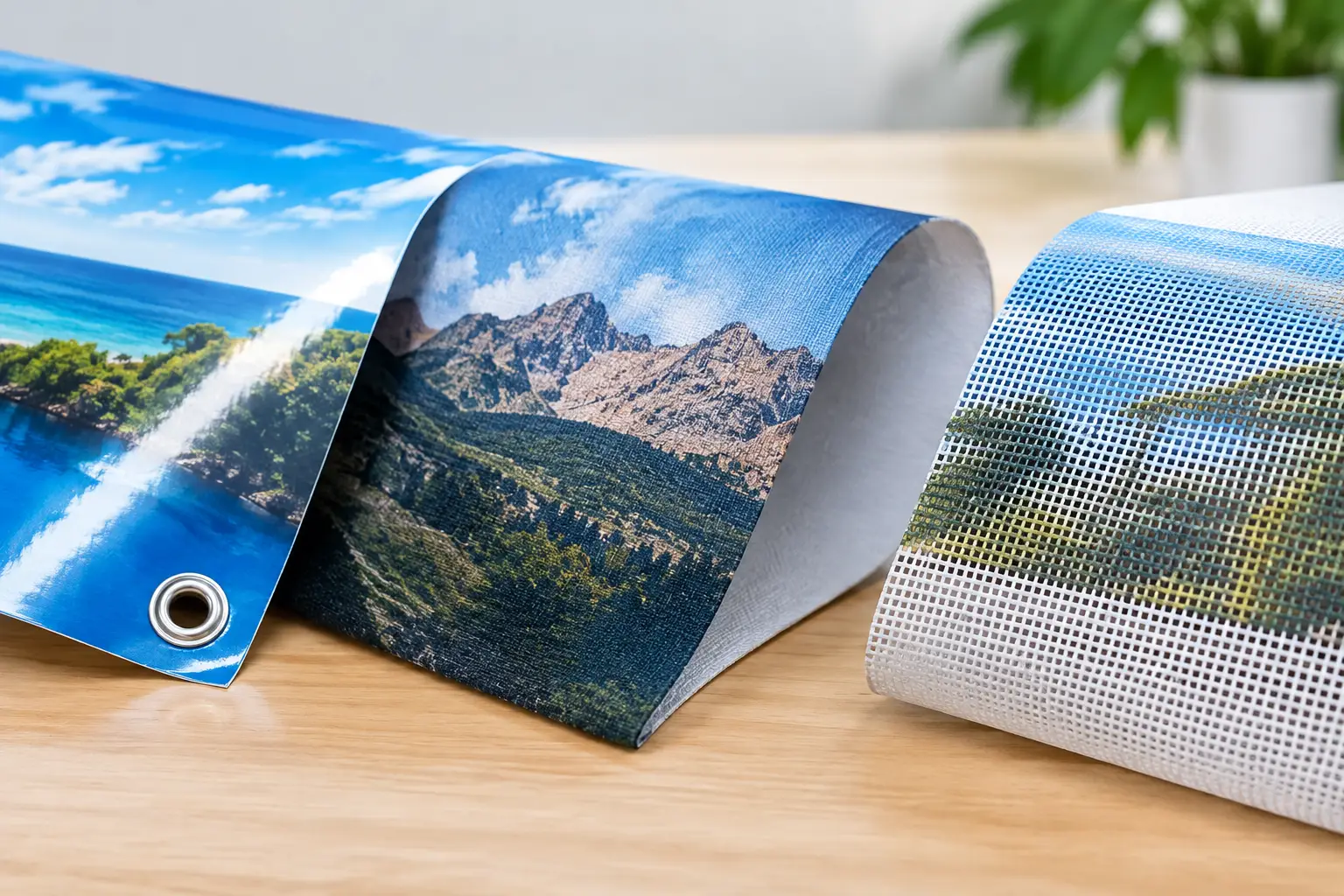
Vinyl is the standard choice for many outdoor banners because it is durable, affordable, and adaptable. It handles full-color printing well, cleans easily, and can be finished with hems, grommets, pole pockets, or reinforced corners depending on how it will be installed.
For storefront promotions, grand openings, real estate listings, sponsor banners, job sites, and event signage, vinyl is often the practical choice. It delivers bright color and strong readability without pushing the budget too far.
Not all vinyl is the same. A heavier banner stock generally offers more durability and a more substantial feel, while thinner material can be appropriate for a short campaign or indoor use. If a banner will be displayed outdoors for an extended period, ask for reinforced finishing. The print may look great, but weak hems or poorly placed grommets can shorten the life of the banner.
Vinyl does have trade-offs. In high wind, it can act like a sail. It is also less refined than fabric for close-up indoor branding, especially in polished spaces such as conference rooms, trade show booths, or retail environments.
Mesh banners: built for wind and open spaces
Mesh is vinyl with small perforations that allow air to pass through. From a normal viewing distance, the graphic still reads clearly. Up close, you will notice the holes, which is why mesh is not usually the first choice for a premium indoor display.
This material is a smart fit for chain-link fences, construction sites, parking areas, sports facilities, and exterior locations with frequent wind exposure. A solid vinyl banner mounted on a fence can strain fasteners and tear when conditions get rough. Mesh reduces that pressure and is often the safer long-term option.
There is a visual compromise. Because part of the surface is perforated, colors may appear slightly less solid than on standard vinyl. Strong logo files, simple layouts, bold type, and high-contrast colors help compensate. Avoid relying on very small text or subtle image details for a mesh banner viewed at close range.
Fabric banners: the polished indoor choice
Fabric banners create a more upscale appearance than vinyl. They are ideal for trade show backdrops, step-and-repeat displays, office interiors, presentations, retail displays, and event environments where people will stand close to the graphic.
The biggest advantage is presentation. Fabric has a softer, less reflective finish than vinyl, which can improve photography and reduce glare under exhibit hall or office lighting. It also travels well when properly packed and often looks more like part of the environment than a temporary sign.
Fabric is not automatically the right answer for every project. It typically costs more than standard vinyl and is not the best material for prolonged exposure to rain, dirt, and wind. If your banner is headed outdoors, especially in a high-traffic or unpredictable environment, vinyl or mesh will usually provide better value.
Print Quality Depends on More Than the Material
A high-quality banner begins with an accurate logo, a properly sized design file, and a layout built for the way people will see it. Material can improve durability and appearance, but it cannot rescue a cluttered message or low-resolution artwork.
Keep the primary message focused. A banner should answer the most immediate question: who you are, what you offer, or what action the viewer should take. Your phone number, website, event date, or call to action should be easy to find, not buried under a long paragraph of copy.
Color consistency also deserves attention. If your brand appears on business cards, vehicle graphics, a website, apparel, and banners, those pieces should feel connected. A slightly different shade of blue or an altered logo treatment may seem minor on its own, but repeated inconsistencies reduce credibility. Centralizing design and print production helps minimize those avoidable mistakes.
Finishing Choices Can Make or Break the Installation
A banner needs the right finishing for its location. Grommets are common for wall, fence, and temporary outdoor installations. Pole pockets work well for street-pole displays, retractable hardware, and hanging applications. Hems strengthen the edges, while reinforced corners add support where tension is greatest.
Think about how the banner will be secured before ordering it. Bungee cords allow some movement and can help reduce stress outdoors. Zip ties are quick and inexpensive, but they can become too tight and contribute to tearing if the banner shifts in the wind. For a permanent or highly visible installation, the mounting approach deserves the same attention as the print itself.
If you are using a banner stand, confirm the exact hardware size and graphic specifications. A beautifully printed banner that does not fit the display hardware creates a preventable delay, especially before a trade show, open house, or major event.
How Long Should a Banner Last?
Expected lifespan depends on material, weather exposure, installation, and care. An indoor fabric banner can stay presentation-ready for years when stored correctly. An outdoor vinyl banner may perform well for months or longer, but sun, wind, rain, and repeated handling will eventually take their toll. Mesh can extend the useful life of banners in windy locations by reducing wind load.
For seasonal sales, a short-term campaign, or a one-time event, it may not make sense to pay for the heaviest material and most extensive finishing. For a building sign, a fence wrap, or a banner that represents your business every day, cutting corners can cost more when replacement becomes necessary.
Store reusable banners clean and dry. Roll them instead of folding them when possible, since hard creases can remain visible. Keep hardware and graphics labeled together so your team can set up the display without guessing before the next event.
Choose the Material That Supports the Job
There is no single best banner material. Vinyl is the dependable workhorse for many promotions and outdoor signs. Mesh is the practical choice where wind is a real factor. Fabric delivers a cleaner, more professional finish for indoor displays and face-to-face brand experiences.
The best decision comes from looking at the full project, not just the per-banner price. Consider where it will hang, how long it needs to perform, who will see it, and what impression it should create. A clear plan protects your budget and gives your business signage that looks as professional as the work behind it.
When the next promotion, event, or installation is on the calendar, choose the banner material based on the environment first. Your message will have a much better chance of staying visible, readable, and worth remembering.