A missed deadline on business cards or a color mismatch on a trade show banner usually teaches the same lesson fast: printing is not just about getting ink on paper. When businesses compare print shop vs online printer options, the real question is which one reduces mistakes, protects your brand, and keeps your marketing moving.
For some jobs, an online printer is perfectly fine. For others, a local or hands-on print shop can save you time, rework, and a lot of frustration. The best choice depends on what you are printing, how tight the deadline is, how much guidance you need, and how important brand consistency is across every piece.
Print shop vs online printer: the real difference
At a basic level, online printers are built for speed, convenience, and standardized ordering. You upload artwork, choose specs, place the order, and wait for delivery. That model works well when your files are already press-ready and your project is straightforward.
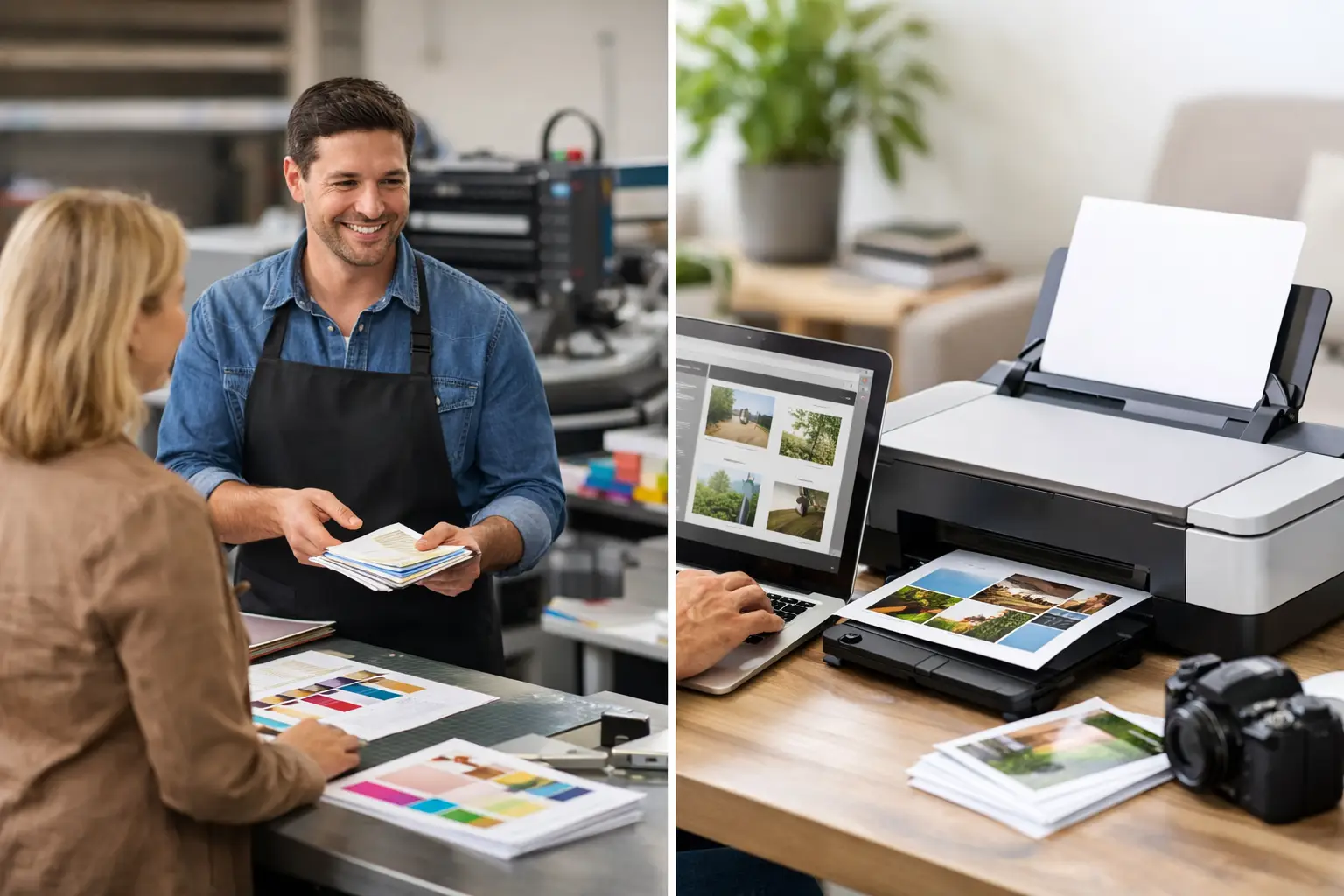
A print shop usually offers more direct support. That can mean talking to an actual person before production, reviewing materials, checking proof details, adjusting sizing, and solving problems before they get expensive. If your business has ever dealt with blurry logos, weak paper stock, inconsistent colors, or a file that looked great on screen but bad in print, that support matters.
This is why the comparison is not really local versus digital. It is self-service versus guided service. One is built around transaction efficiency. The other is built around project accuracy and business outcomes.
When an online printer makes sense
Online printing can be a smart option if your job is simple and repeatable. If you need a standard run of flyers, postcards, or business cards and your design files are correct, ordering online may save money upfront.
It also works well for teams that already have internal design support. If someone on your side understands bleed, trim, safe zones, color setup, and file packaging, an online printer can be a practical production tool. You are mostly buying output, not consultation.
Price is often the biggest draw. Online printers can offer aggressive rates because their systems are automated and their product options are standardized. For businesses ordering high-volume, standard-format pieces, that can be appealing.
But lower pricing has a trade-off. If something goes wrong, support is usually limited to what fits their process. That means you may spend more time troubleshooting on your own, resubmitting files, or reordering pieces that missed the mark.
When a print shop is the better business decision
A print shop tends to be the stronger choice when the job has more moving parts. That includes custom sizes, premium finishes, event materials, signage, sales kits, presentation folders, and anything tied closely to your brand image.
It is also the better fit when timing is tight. If you have a conference next week, a client meeting in two days, or a storefront opening that cannot slip, direct communication can be the difference between getting it done and scrambling at the last minute.
There is also the issue of consistency. Many small and mid-sized businesses are not just printing one item. They need business cards, brochures, banners, leave-behinds, branded apparel, and digital assets that all look like they belong to the same company. A hands-on print partner can help maintain that consistency across materials instead of treating each order like a separate transaction.
That matters more than many businesses realize. A polished, consistent presentation adds credibility. A patchwork presentation raises questions.
Quality control is where the gap gets obvious
Most printing problems do not start at the press. They start in the setup. Wrong resolution, incorrect margins, poor contrast, unexpected color shifts, and weak file prep create expensive headaches. Online printers usually assume your artwork is ready to go. A print shop is more likely to catch issues before they become finished-product problems.
That extra review is especially valuable for businesses without an in-house marketing department. If your office manager, sales rep, or business owner is wearing five hats already, the last thing you need is to become a print technician too.
Complex jobs need collaboration
The more customized the project, the more valuable real collaboration becomes. Think trade show displays, direct mail packages, signage systems, multi-page booklets, or anything that must line up with existing brand standards.
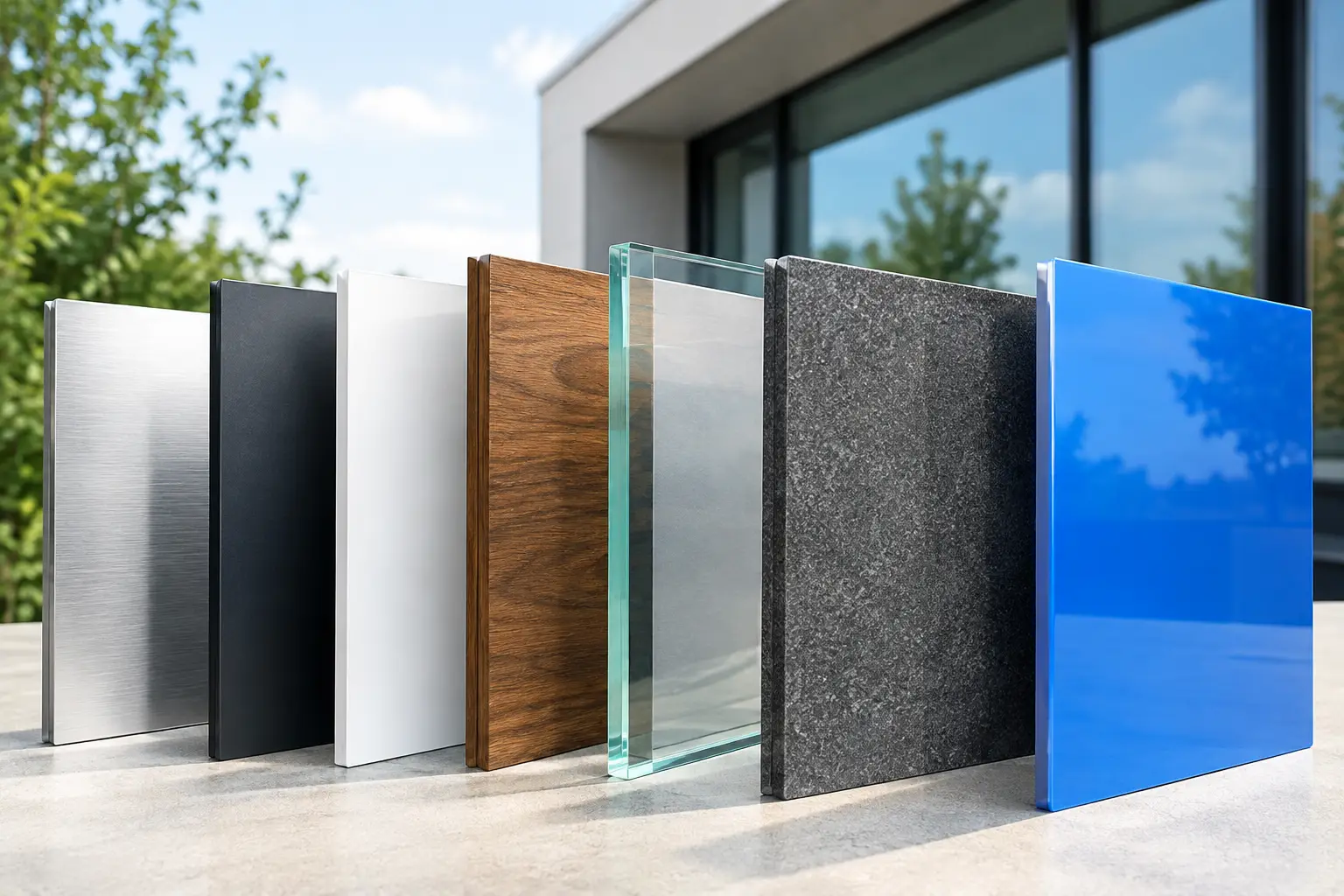
Those jobs often require decisions about substrate, finish, durability, shipping, setup, and file adaptation. A print shop can walk through those details with you. That does not just improve the final piece. It reduces delays, avoids waste, and helps you make better budget decisions.
Cost: cheaper upfront is not always cheaper overall
A lot of businesses start with price, and that is understandable. Marketing budgets are real. Margins matter. But with print, the cheapest order is not always the lowest-cost decision.
If an online printer saves you a little on the front end but the colors are off, the sizing is wrong, or the cards arrive too late for your event, the true cost goes up fast. Now you are paying in rush fixes, lost opportunities, team time, and brand damage.
A print shop may quote higher on some jobs because the service level is higher. You are not just paying for paper and ink. You are paying for oversight, problem prevention, material guidance, and accountability.
That is why smart businesses look at total project cost, not just invoice cost. If support reduces errors and keeps campaigns on schedule, the return can be better even if the unit price is higher.
Speed depends on the kind of speed you need
Online printers are often fast when everything goes according to plan. If your file is clean and the order is standard, production can move quickly.
But there is a difference between fast ordering and fast problem-solving. If a file gets flagged, a shipment is delayed, or the finished piece is not right, online speed can disappear. You are now working through a queue instead of talking to someone who knows your project.
A print shop may feel slower at the ordering stage because there is more conversation up front. In practice, that often makes the whole job faster because errors get caught early and the final product is more likely to be right the first time.
For deadline-driven businesses, that distinction matters. Fast is only useful if the result is usable.
Brand consistency is the deciding factor for many businesses
If you only print one product once in a while, the decision is simpler. If you market actively across print, signage, apparel, promo items, and digital channels, the decision gets bigger.
Brand consistency is hard to maintain when design, print, and production are split across several vendors who never talk to each other. Colors drift. Messaging changes. Logos get stretched. Materials feel disconnected. Customers notice, even if they do not say it out loud.
That is where a more integrated partner has a real advantage. When one team understands your visual identity and your business goals, your materials work together better. You spend less time repeating instructions and less money fixing avoidable issues. For many growing companies, that convenience alone is worth it.
How to choose the right option for your next project
If the piece is simple, standardized, and built from production-ready files, an online printer may do the job just fine. If the project is important, custom, brand-sensitive, or deadline-driven, a print shop is usually the safer business move.
Ask yourself a few practical questions. Do you need guidance on paper, finish, or format? Do you need confidence that colors and layout will print correctly? Do you need multiple pieces to match across a campaign or event? Do you need someone to catch problems before production starts? If the answer is yes to any of those, support is not a luxury. It is part of the product.
At Echo Brand Geeks, that is the point we see most often: businesses do not just need printing. They need fewer headaches, better consistency, and materials that help them look credible and ready to sell.
The right print partner is the one that fits the risk level of the job. If the project is low-stakes and highly repeatable, keep it simple. If it represents your brand in front of customers, investors, prospects, or event traffic, choose the option that gives you confidence before, during, and after the order.