A busy trade show floor gives attendees only a few seconds to decide whether your booth is worth a closer look. This trade show signage guide will help you make those seconds count with clear messaging, consistent branding, and display materials that support real sales conversations.
Your signage does more than decorate a booth. It establishes credibility before your team says hello, explains what you do from a distance, and gives visitors a reason to stop. When the message is unclear, the graphics are hard to read, or your materials do not match, even a great product or service can get overlooked.
Start With One Clear Booth Goal
Before choosing banners, table throws, backdrops, or display walls, decide what the booth needs to accomplish. Some businesses need to build local awareness. Others want to schedule consultations, demonstrate a product, recruit talent, introduce a new service, or collect qualified leads.
Trying to accomplish every goal on one sign creates a crowded message. Choose the primary action you want visitors to take, then build your signage around it. A home services company may lead with a clear promise such as faster scheduling or a service guarantee. A B2B software company may focus on the operational problem it solves. A real estate professional may use signage to establish local expertise and invite people to start a conversation.
Your strongest headline should answer a visitor’s first question: what do you do, and why should I care? Keep it benefit-focused. “Commercial cleaning” identifies a category. “Cleaner facilities without disrupting your workday” gives people a reason to engage.
Use a Trade Show Signage Guide to Plan the Visitor View
Trade show signs are read at different distances. A visitor walking down an aisle sees your back wall first. Someone at the edge of your booth may notice a retractable banner or product display. A person already in conversation can read handouts, tabletop signage, and detailed comparison graphics.
Plan your message in layers. Your largest display should communicate your business name, logo, and core value proposition from across the aisle. Secondary signs can highlight services, proof points, or a focused offer. Printed materials can carry the details that would be too small or too dense for a wall display.
A useful rule is to avoid turning your backdrop into a brochure. If every service, phone number, certification, testimonial, and product feature is competing for attention, visitors will not know where to look. Give the eye a clear path: logo, headline, supporting point, then call to action.
Design for Distance First
Font size, contrast, and placement determine whether a message works in a crowded exhibit hall. Small text may look sharp on a computer screen but disappear from six feet away. Use large, simple headlines and high-contrast color combinations. Avoid placing key text too low, where it will be hidden by tables, chairs, product samples, or people standing in front of the booth.
Photos should support the message, not overpower it. A strong image can quickly show a finished project, a product in use, or the customer outcome you provide. Generic stock imagery may fill space, but it rarely makes your business memorable. When possible, use real project photos, recognizable team imagery, or custom graphics that reflect your brand.
Keep the Copy Short and Useful
Trade show attendees are scanning, not studying. Write signage copy in short phrases that can be understood quickly. Strong options include a practical benefit, a differentiator, a relevant statistic, or a direct invitation to speak with your team.
For example, “Custom websites built to generate leads” is more useful than “We provide innovative digital solutions.” The first tells visitors what they can expect. The second sounds polished but does not explain much.
If your business serves several audiences, resist the urge to speak to all of them at once. You may need different messages for different events. A sign built for a construction industry event should not necessarily say the same thing as one used at a local business expo.
Choose Signage That Fits Your Booth and Budget
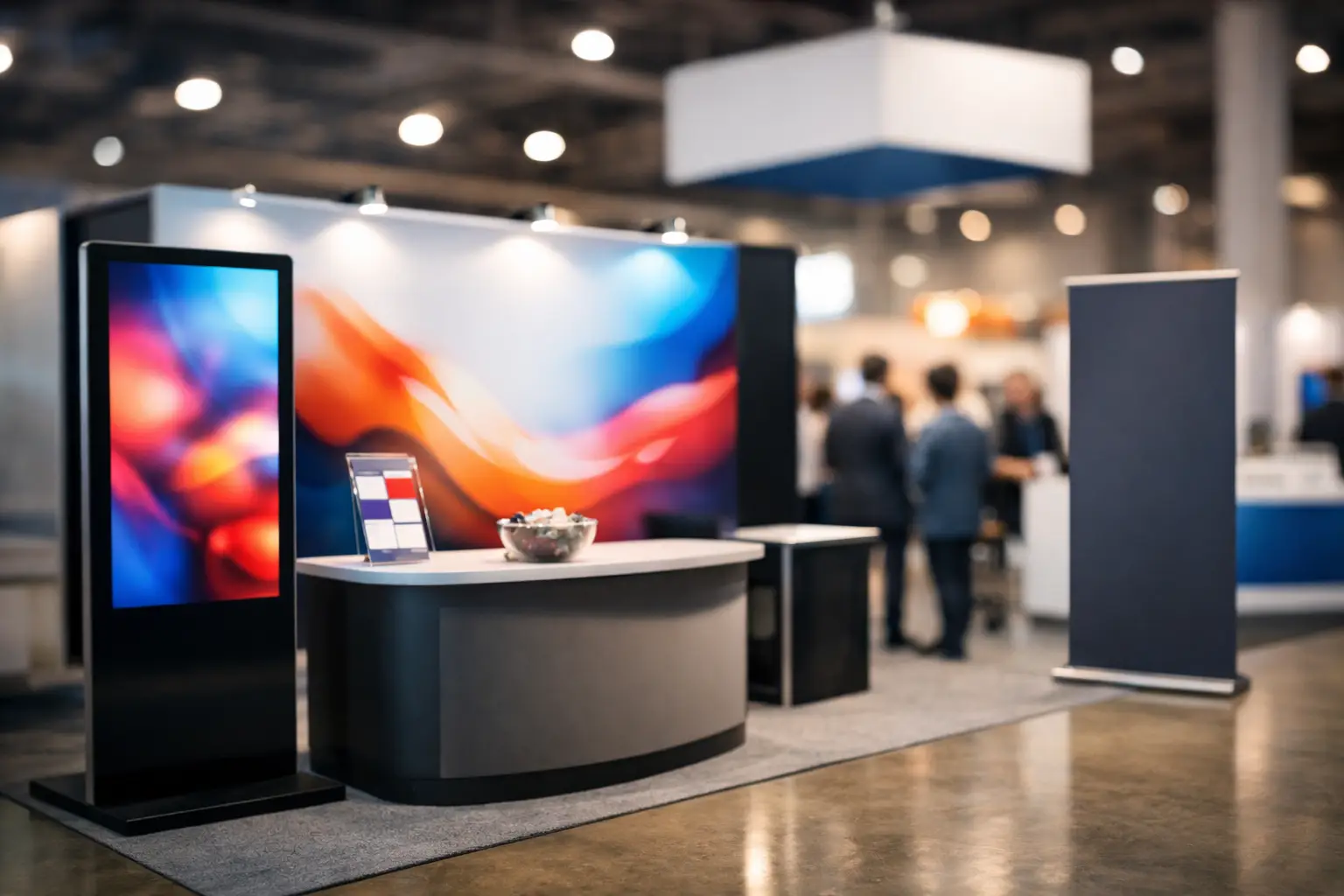
The right display package depends on booth size, event frequency, travel needs, and how much flexibility you need. A simple 10-by-10 booth can look professional with a branded table throw, one or two retractable banners, and a clear backdrop. Larger booths may benefit from modular display walls, hanging signs, floor graphics, product stations, or multiple message zones.
Retractable banners are portable, reusable, and easy to update when your offer changes. They work well for focused messages, service highlights, and directional information. Backdrops create a stronger visual anchor and give your team a polished setting for conversations and photos. Tabletop signs and printed collateral help reinforce the message once a visitor is already at the booth.
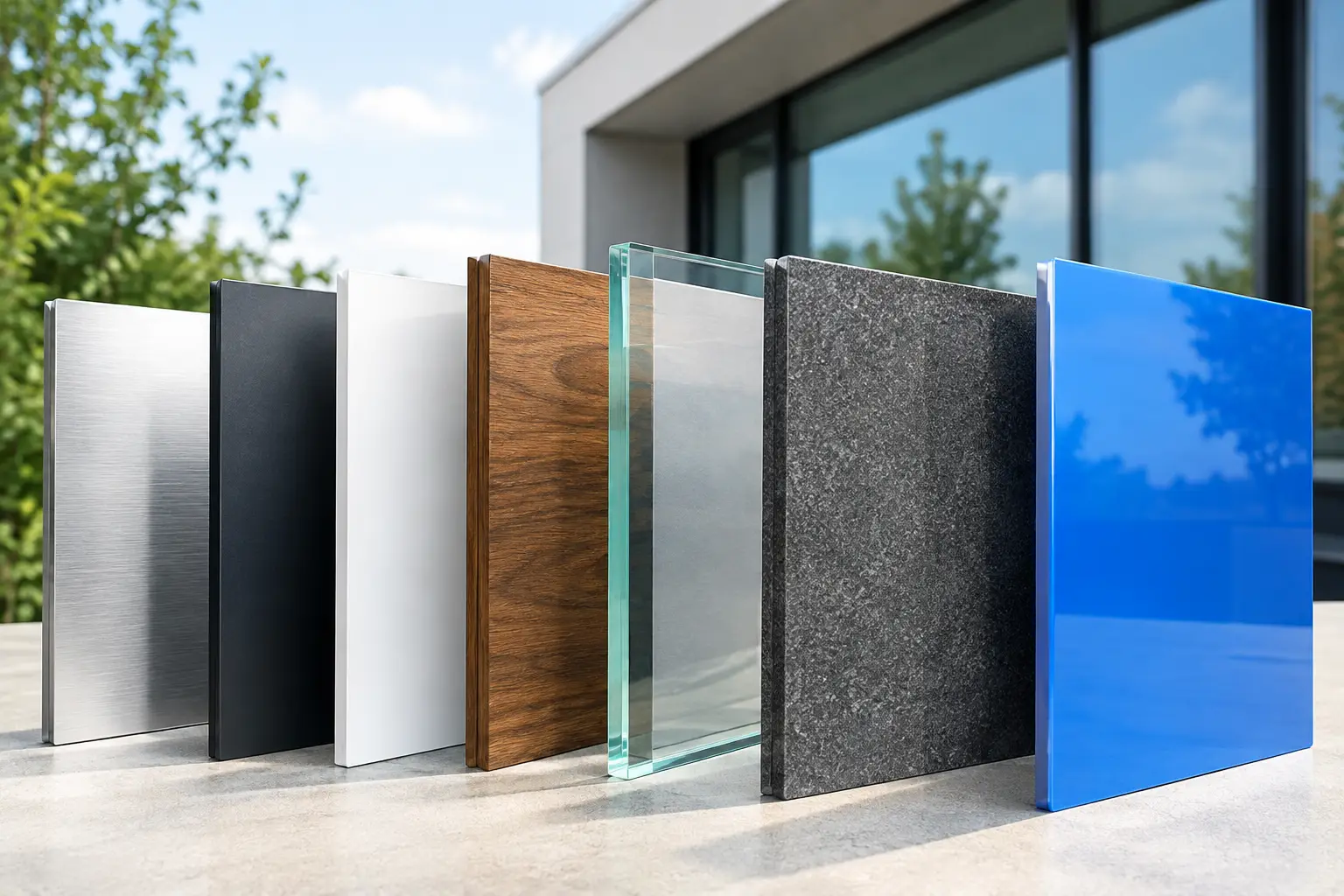
The lowest upfront cost is not always the best value. Thin materials, poor print quality, weak hardware, or difficult setup can create problems at the event and shorten the useful life of your display. On the other hand, an expensive custom build may not make sense if you attend one small event each year. The practical choice is the one that looks professional, travels well, and can be reused often enough to justify the investment.
Make Every Piece Look Like the Same Brand
A trade show booth often includes items produced at different times: banners, business cards, brochures, giveaways, staff apparel, digital presentation screens, and lead forms. If the colors, logo versions, fonts, or tone vary from one item to another, the booth can feel less established than it really is.
Consistency builds trust. Use the same approved logo, core colors, type treatments, and voice across every piece. Your booth should feel connected to your website, social profiles, sales materials, and follow-up emails. That continuity makes it easier for prospects to recognize you after the event.
This is where working with one hands-on branding and production partner can reduce headaches. Instead of sending separate files to separate vendors, you can keep creative direction, print production, apparel, promotional products, and supporting marketing materials aligned from the start.
Build a Clear Path to the Next Step
Signage gets attention, but the next step turns attention into opportunity. Decide what you want visitors to do after they stop: scan a QR code, book a consultation, request a quote, enter a giveaway, watch a demonstration, or take a brochure.
Use one primary call to action rather than several competing instructions. Make it visible and easy to complete. If you use a QR code, give people a reason to scan it, such as access to a useful resource, event-only offer, or appointment calendar. Test it before the show, and make sure the landing page matches the message on the sign.
Your staff should also know how signage supports the conversation. If a banner promotes a particular service or offer, every person in the booth should be ready to explain it in a clear, consistent way. Good graphics create the opening. Prepared people move the conversation forward.
Avoid the Most Common Signage Mistakes
Many trade show display problems are preventable. The most common issue is too much information. Businesses want to make the most of limited booth space, so they add more copy, more photos, and more logos. The result is a display that says everything but communicates nothing quickly.
Another mistake is designing without considering the actual environment. Lighting, aisle traffic, booth placement, ceiling height, and neighboring displays all affect visibility. A dark design can disappear in a dim hall. A subtle color palette may struggle next to a competitor using bold graphics. Ask for a layout proof and think about what visitors will see as they approach from the aisle.
Finally, do not wait until the last minute. Rush production can limit material choices, increase costs, and leave little time to check artwork, packaging, or setup instructions. Plan early enough to review proofs, correct errors, and practice assembling the booth before event day.
Treat Your Booth as Part of Your Sales System
The best trade show signage is not simply attractive. It supports your larger marketing effort by making your business recognizable, credible, and easy to understand. It gives your sales team a strong visual foundation and gives prospects a clear reason to remember you later.
Before your next event, look at your booth from the aisle and ask one simple question: would a stranger understand what you offer in five seconds? If the answer is not an immediate yes, simplify the message, strengthen the visual hierarchy, and make your brand easier to choose.