A lot of businesses ask for a logo when what they really need is a brand package. That difference matters. If you are wondering what does a brand package include, the short answer is this: it should give your business the visual tools and practical assets needed to show up consistently across print, digital, and promotional marketing.
A logo by itself can look great on a screen and still fall apart everywhere else. It might not scale well on signage, print poorly on apparel, or feel disconnected from your website and sales materials. A real brand package helps prevent those problems before they start. It gives you a system, not just a graphic.
What does a brand package include at the core?
At the center of most brand packages is your logo system. That usually means more than one file and more than one layout. A business needs a primary logo, alternate versions for different spaces, and a simple icon or mark that can work in tighter applications like social profiles, embroidery, or promo items.
File types matter too. A useful package should include web-ready files and print-ready files, plus vector artwork that can scale cleanly for larger uses like banners, vehicle graphics, and trade show displays. Without those formats, businesses often end up recreating artwork later, which costs time and creates avoidable errors.
Color is another core piece. A brand package should define your primary brand colors and, in many cases, a secondary palette. This is not just for looks. Consistent color use helps customers recognize your business faster, and it keeps printed materials, digital graphics, signage, and merchandise from looking like they came from different companies.
Typography is usually included as well. That means selecting the fonts used in your logo, headlines, and body copy, along with simple guidance on when and how to use them. This may sound minor, but typography has a big impact on whether your brand feels polished or pieced together.
Many businesses also receive a basic style guide as part of the package. This can be a short reference document or a more detailed brand standards guide. Either way, it should explain logo usage, spacing, colors, fonts, and a few examples of correct and incorrect applications. If multiple people touch your marketing, this guide saves headaches.
The difference between a logo package and a brand package
This is where many business owners get tripped up. A logo package is typically focused on the logo files themselves. A brand package goes further by building out the visual identity and preparing it for real-world marketing use.
If your business only needs a quick mark for a temporary project, a logo package may be enough. But if you plan to print business cards, launch a website, create brochures, order apparel, post on social media, or show up at events, a broader package usually makes more sense. It reduces the need to make decisions one piece at a time, and that improves consistency.
That is also why the best packages are tied to how your business actually operates. A local contractor, lender, real estate team, restaurant, or B2B service company may all need branding, but the supporting assets will differ. A good package is not bloated with items you will never use. It is built around the channels that help you sell.
Common brand package add-ons that make a real difference
Once the core identity is in place, many companies add business-ready materials that help them put the brand to work right away. This is often where a brand package becomes more valuable.
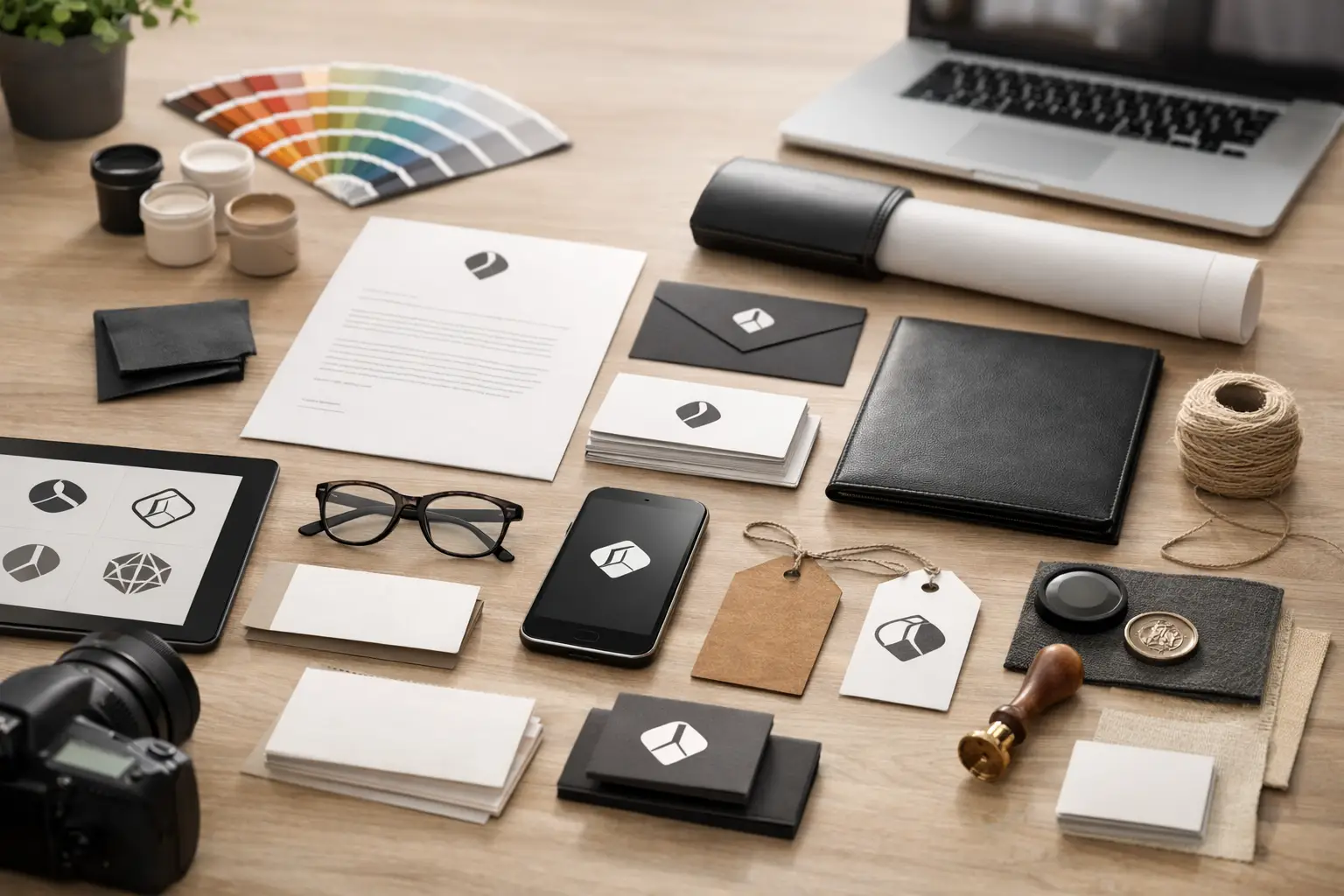
Business card design is one of the most common additions because it is still a practical credibility tool. The same goes for letterhead, envelopes, presentation folders, and email signature design. These pieces are not flashy, but they support a professional first impression.
Marketing collateral is another frequent add-on. Depending on the business, that may include postcards, flyers, brochures, rack cards, sales sheets, or trade show graphics. If your team regularly hands out printed materials or attends events, these assets should feel connected to the rest of the brand, not designed in isolation.
Digital items are often part of a modern package too. That may include website design direction, social media profile graphics, digital ad templates, landing page styling, or branded graphics for online campaigns. If the print side and digital side are developed separately, businesses often end up with a fragmented look that weakens trust.
Promotional products and apparel can also fit naturally into a brand package, especially for companies that rely on local visibility, events, crews in the field, or referral relationships. Branded shirts, hats, pens, mugs, and giveaways work best when the logo system has already been designed to adapt cleanly across different surfaces.
What should be in your brand package depends on how you market
There is no single checklist that fits every company. A startup may need naming support, logo development, brand colors, a website, and launch materials. An established business with an outdated image may need a refresh, updated print pieces, new signage, and a cleaner digital presence.
If you have a sales team, you may need presentation pieces and leave-behind materials. If you rely on local traffic, signage and storefront graphics may matter more. If your brand shows up heavily at expos and community events, booth displays and promotional items should probably be planned from the beginning.
This is where strategy stays practical. The best question is not, “What is included in the fanciest package?” It is, “What does my business need to look consistent and credible everywhere customers see us?” That keeps the investment focused and useful.
What a complete brand package should help you avoid
A solid package is not just about adding assets. It should also reduce problems that cost money later. One of the biggest problems is inconsistency. Maybe your website uses one version of the logo, your signage uses another, and your printed materials use colors that are close but not right. That patchwork look chips away at credibility.
Another common issue is file confusion. Businesses often have an old logo saved from a screenshot, a low-resolution version from social media, and a random file from a past vendor that no one can open. When it is time to print banners or wrap a vehicle, the right art is nowhere to be found. A proper brand package solves that by organizing usable files from the start.
Then there is the vendor problem. When design, print, web, and promotional work are handled by separate providers with no shared standards, mistakes happen. Colors shift. Layouts drift. Production quality varies. Managing all of that internally becomes one more job on your plate. A more integrated approach usually means fewer revisions and less backtracking.
How to tell if a brand package is actually useful
A good package should be clear, usable, and built for execution. If it looks impressive in a presentation but does not help you order signs, update your website, print brochures, or create apparel, it is incomplete.
Ask whether the deliverables match the way your business markets itself. Ask whether you will receive organized files in formats your vendors can actually use. Ask whether the package includes practical guidance, not just design concepts. And ask whether the identity can flex across print, digital, and promotional applications without losing consistency.
This is where working with a hands-on partner matters. Businesses rarely need abstract branding for branding’s sake. They need identity tools that support sales, visibility, and day-to-day marketing. That is why companies often get better results when branding is developed with real production in mind, from business cards and brochures to websites, signage, and branded merchandise.
For many small and mid-sized companies, that practical approach is what turns branding from a nice idea into a useful business asset. Echo Brand Geeks works in that space every day because brand consistency is not just about appearance. It affects trust, efficiency, and how confidently your business shows up in the market.
If your current materials feel disconnected, your next step is not simply getting a new logo. It is building a brand package that gives your business the right tools to look professional everywhere customers find you.