A branded pen that leaks or a cheap giveaway that gets tossed by lunchtime does more harm than good. The best promotional items for clients are the ones people keep, use, and connect with your business in a positive way. If the goal is better brand recall, stronger credibility, and fewer wasted marketing dollars, the right item matters just as much as the logo printed on it.
For most businesses, promotional products are not just about putting your name on something. They are part of a larger brand system. The item should match your audience, reflect your standards, and support the way your business sells. A real estate team, a lender, a contractor, and a B2B service firm may all use branded merchandise, but they should not all order the same products for the same reasons.
How to choose the best promotional items for clients
The smartest place to start is utility. If people can use the item in their daily routine, your brand has a better chance of staying visible. After that, look at perceived value. A product does not have to be expensive, but it should feel intentional and well made.
You also need to think about context. Are you handing these out at trade shows, including them in client welcome kits, mailing them after closing a deal, or dropping them off as leave-behinds? The best item for a networking event may not be the best item for a high-value client relationship.
Brand consistency matters too. Colors, logo placement, messaging, and packaging all shape how the item is received. A premium notebook with clean design can reinforce professionalism. The same notebook with crowded artwork and off-brand colors can look rushed. That is why businesses usually get better results when promotional products are planned alongside print materials, event graphics, and overall brand presentation instead of being ordered in isolation.
1. Premium pens
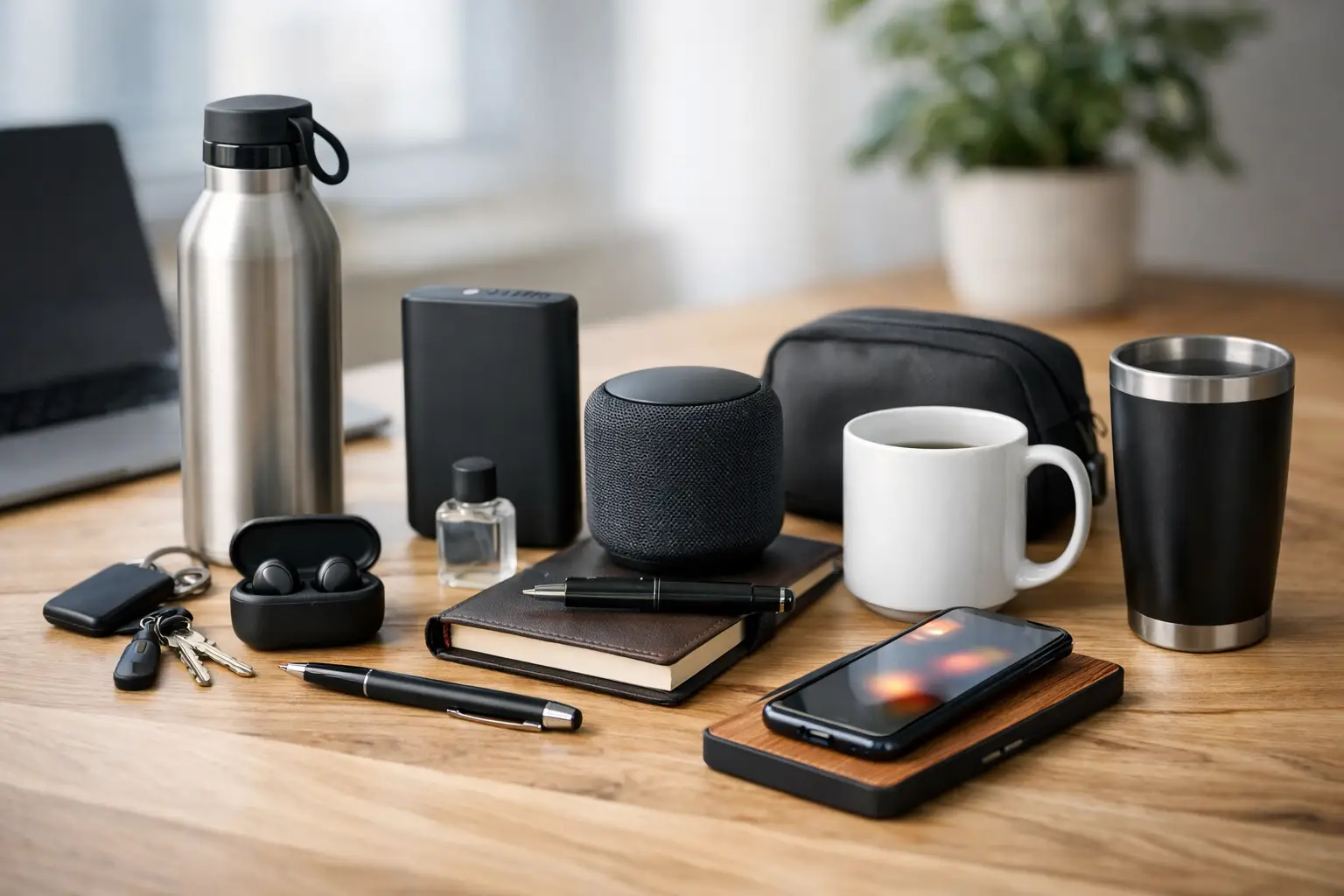
Pens remain one of the most reliable client giveaways because people actually use them. The catch is quality. A smooth-writing metal or soft-touch pen feels useful and professional, while a flimsy plastic pen can make your business feel forgettable.
Pens work especially well for banks, title companies, medical offices, real estate professionals, and service businesses with frequent face-to-face contact. They are affordable enough for larger quantities and practical enough to keep circulating. If budget is tight, this is one of the safest categories to get right.
2. Notebooks and journals
A branded notebook has more staying power than many low-cost giveaways because it sits on a desk, goes to meetings, and gets reused over time. It also carries a higher perceived value, which makes it a solid choice for client onboarding kits, conferences, and professional service firms.
This item works best when the design is restrained. A subtle logo and clean cover often perform better than heavy promotional graphics. If your audience includes executives, developers, lenders, or B2B decision-makers, notebooks tend to land well because they feel useful without feeling disposable.
3. Tumblers and insulated drinkware
Drinkware consistently ranks among the best promotional items for clients because it gets repeated exposure. People use tumblers at the office, in the car, at job sites, and at home. That kind of visibility is hard to beat.
The trade-off is cost. Better drinkware usually costs more, so it makes sense for stronger client relationships, referral partners, employee gifts, or milestone campaigns rather than broad handouts. If you choose this route, quality matters. A well-insulated tumbler can become part of someone’s daily routine. A poor one ends up forgotten in a cabinet.
4. Tote bags
A durable tote bag gives your brand mobility. Clients use them for events, groceries, office materials, and travel, which turns one item into repeated impressions. They are also useful at trade shows because they can hold brochures, folders, and other handouts during the event.
Material and design make a big difference here. A sturdy canvas or structured tote feels more valuable than a thin bag that tears quickly. For companies focused on professionalism, a cleaner design usually outperforms loud graphics.
5. Desk accessories
Desk items such as mouse pads, phone stands, or padfolios can be excellent choices when your audience works in an office environment. These products stay visible during the workday, which increases the chances of brand recall.
This category is especially effective for B2B firms, insurance professionals, financial services, and companies selling to administrative teams or office managers. The key is choosing accessories people will realistically keep on their desks. Useful beats clever every time.
6. Calendars
Calendars may not feel flashy, but they are still practical for many businesses. A well-designed wall or desk calendar can keep your brand visible for a full year, which gives it strong long-term value.
This option tends to work best with local businesses, service providers, suppliers, and companies that benefit from recurring visibility. The downside is timing. Calendars are seasonal, so they require planning and are less flexible than evergreen products like pens or drinkware.
7. Tech accessories
Phone chargers, cable organizers, webcam covers, and branded power banks can make strong promotional items when your audience is mobile or tech-dependent. These products feel modern and useful, and they can signal that your business pays attention to how clients actually work.
That said, tech accessories are only a smart choice if the quality holds up. Cheap electronics create frustration fast. If you want your brand associated with reliability, do not cut corners here.
8. Branded apparel
Apparel can work well for clients, referral partners, and internal teams, but it needs more selectivity than many businesses expect. A nice quarter-zip, polo, or cap can become a favorite item. The wrong fit, fabric, or design turns into waste.
This category is strongest when the branding is subtle and the garment is something people would wear even without the logo. It is a better fit for relationship-based gifting or team visibility than for mass distribution, unless you are serving a niche audience with strong brand affinity.
9. Welcome kits
Sometimes the best promotional item is not one item at all. A welcome kit that combines a notebook, pen, drinkware, and printed brand materials can create a stronger first impression than any single giveaway.
This approach works well for new clients, new hires, membership programs, and long sales cycles where presentation matters. It also gives you more control over brand consistency. When your printed collateral, packaging, and promotional items all work together, the experience feels organized and credible.
10. Event-ready giveaway bundles
For trade shows, conferences, and community events, bundles can outperform standalone products. A tote with a pen, brochure, notepad, and one higher-value item gives people something practical while supporting your larger marketing message.
This is where planning matters. If your booth graphics, business cards, sales sheets, and promotional products all look like they came from different companies, the message weakens. Businesses often lose momentum not because the giveaway was bad, but because the full presentation lacked consistency.
11. Seasonal gifts
Seasonal promotional items can help strengthen client relationships when timed well. Think branded blankets, holiday gift boxes, or practical cold-weather accessories. These are less about lead generation and more about retention, appreciation, and staying visible at the right moment.
The risk is overdoing it. Seasonal items should feel thoughtful, not generic. If every vendor sends the same holiday gift, the one with stronger presentation and better quality usually stands out.
12. Custom products tied to your industry
Some of the best client gifts are specific to the work your audience does. A home services company might use measuring tapes or flashlights. A real estate team might use closing gifts with home-related utility. A lender might create polished borrower kits. Industry fit often beats trendiness.
This is where a hands-on partner can save time and reduce mistakes. Custom recommendations usually perform better than one-size-fits-all ordering because they account for budget, audience, quantity, and how the product fits into your broader marketing effort.
What makes a promotional item actually work
The item itself is only part of the equation. The best results usually come from products that are useful, well branded, and distributed with purpose. If you are handing out merchandise just to check a box, results will be uneven. If the product supports a sales meeting, event strategy, onboarding process, or client retention plan, it becomes a smarter investment.
It also helps to think beyond unit price. A cheaper item that gets thrown away is more expensive than a slightly better item that stays in use for a year. Good promotional products lower waste by improving retention. They help your brand stay present without repeating the same sales pitch.
For growing businesses, the bigger opportunity is coordination. When your promotional merchandise matches your print materials, signage, website, and overall visual identity, your brand feels more established. That consistency builds trust, especially with clients who are comparing several providers at once.
A lot of business owners end up managing separate vendors for design, print, apparel, and branded merchandise, and that is where delays and inconsistency start to show. Echo Brand Geeks works with businesses that want to simplify that process and make sure every touchpoint looks like it belongs to the same brand.
If you are choosing promotional items for clients, do not start with what is cheapest or trendiest. Start with what your audience will keep, what reflects your standards, and what supports the way you already market and sell. The right product should make your business easier to remember and easier to trust.