A polo shirt for a sales team and a T-shirt for a community event may carry the same logo, but they should not automatically use the same decoration method. The screen printing versus embroidery decision affects how your brand looks, what your order costs, how comfortable the apparel feels, and whether the finished piece fits the job it needs to do.
For businesses, custom apparel is more than a giveaway. It puts your logo in front of customers at job sites, trade shows, storefronts, events, and across your team. Choosing the right method helps you look polished without paying for details that will not translate well to the garment.
Screen Printing Versus Embroidery: The Core Difference
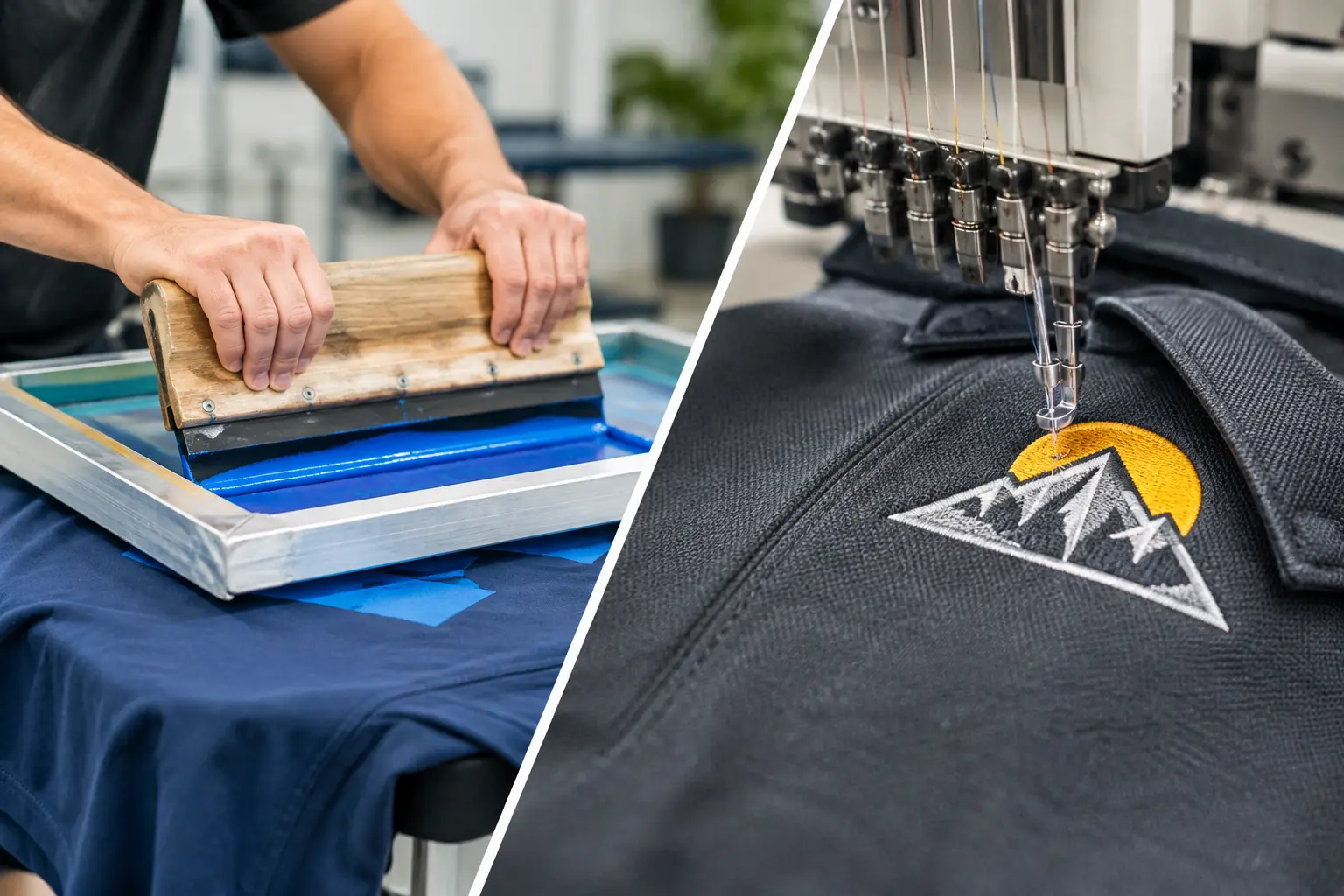
Screen printing applies layers of ink directly onto fabric. It is especially effective for bold graphics, large artwork, solid color areas, and detailed designs with smooth gradients or small printed elements. The result is a clean, visible design that can cover a broad area of a shirt, hoodie, tote bag, or promotional item.
Embroidery uses thread stitched into the material. It creates texture and dimension, giving polos, jackets, hats, fleece, button-downs, and work uniforms a more traditional professional finish. Rather than sitting on the surface like ink, the logo becomes part of the garment.
Neither option is automatically better. Screen printing usually makes more sense when your artwork is large, colorful, or needed in volume. Embroidery is often the stronger choice when you want a durable, premium-looking left-chest logo on structured apparel.
When Screen Printing Makes the Most Sense
Screen printing is built for visibility. If your design includes a large logo, event artwork, a slogan, sponsor names, or a full-back graphic, printing gives you more room to make it readable from a distance. That matters for event staff shirts, restaurant promotions, school spirit wear, contractor tees, product launches, and company giveaways.
It also handles color particularly well. A design with multiple brand colors, fine lines, or a custom illustration may lose clarity when converted to thread. Printing preserves the intended artwork more directly, especially on cotton and cotton-blend T-shirts.
Cost is another reason businesses choose screen printing. There are setup considerations because screens are created for each ink color, but the per-item price generally becomes more attractive as quantity rises. If you need 50, 100, or several hundred shirts with the same design, screen printing can keep the project efficient and consistent.
Screen printing is not limited to basic tees. It works well on hoodies, long-sleeve shirts, athletic wear, tote bags, and many promotional textiles. The right ink and production approach depend on the garment fabric, color, and intended use. A dark shirt, for example, may need an underbase to keep colors bright and accurate.
The trade-off is feel. Larger ink areas can add weight to the garment, particularly when the design uses several colors or a heavy ink deposit. A small front logo will feel minimal, while a large full-back design will be more noticeable. For most promotional apparel, that is a fair trade for strong visual impact.
When Embroidery Is the Better Fit
Embroidery earns its place when credibility and durability are central to the project. A stitched logo on a polo, quarter-zip, jacket, cap, or button-down sends a different message than a printed graphic. It is a natural fit for client-facing teams, property managers, financial professionals, hospitality staff, medical offices, field supervisors, and B2B organizations.
Thread has a tactile quality that helps a simple logo feel elevated. This is why embroidery works especially well for left-chest branding, where the logo is visible in one-on-one conversations without overwhelming the garment. It can make uniforms feel more intentional and help your team present a consistent image across locations or roles.
Durability is a major advantage. Properly embroidered apparel holds up well through regular wear and laundering because the design is stitched into the fabric. It is a strong choice for workwear that will be worn repeatedly rather than handed out once at an event.
Still, embroidery has limitations. Fine text can become hard to read, and tiny details may need to be simplified. Thread also cannot reproduce smooth color gradients the way printing can. A logo that looks sharp on a website or business card may require adjustments before it can be embroidered cleanly.
The garment itself matters, too. Embroidery can pull or pucker lightweight materials if the design is too dense. It is generally better suited to stable fabrics and structured items. A good production partner will review the logo, garment, and placement before moving forward, reducing the risk of a result that looks uneven or bulky.
Consider Your Logo Before You Choose
Your logo is often the deciding factor. A clean one-color mark or a simple two-color icon can work beautifully in either method. The choice then comes down to garment type, placement, budget, and the impression you want to make.
Complex artwork usually leans toward screen printing. This includes detailed illustrations, photographic elements, very small lettering, gradients, and designs that rely on precise color transitions. Printing allows more of that artwork to remain intact.
Embroidery favors clear shapes, thicker lines, and readable lettering. A logo with a simple icon and business name can look excellent in thread, particularly at a standard left-chest size. If your logo has too much detail, it may need a separate embroidery version. That is not a compromise in your brand standards. It is a practical way to protect legibility across different materials.
This is where brand consistency becomes more than using the same logo file everywhere. Consistency means adapting your identity correctly so it looks professional on every touchpoint, from business cards and signage to polos and event shirts.
Cost, Quantity, and Placement Change the Math
There is no single answer to which method costs less because order size and artwork drive the price. Screen printing often becomes more cost-effective for larger quantities, especially when the design is limited to a manageable number of ink colors. It is a practical choice for a large staff event, promotional campaign, or retail run.
Embroidery pricing is typically based on stitch count and the number of locations. A compact left-chest logo may be a smart investment for 12 polos, while a large, dense embroidered design can raise the cost quickly. More thread and more production time are required to create it.
Placement deserves equal attention. Screen printing shines on large front, back, and sleeve designs. Embroidery is commonly used on the left chest, hat front, sleeve, or jacket chest. Some projects benefit from both: an embroidered logo on the front of a polo or jacket, paired with a screen-printed event message on the back of a T-shirt.
A Practical Way to Make the Right Choice
Start with the purpose of the apparel. Is it a uniform your team will wear all year, a trade show giveaway, a construction crew shirt, or merchandise for a customer-facing event? The answer narrows the options fast.
Then look at four practical factors: the complexity of your logo, the garment fabric, the number of pieces you need, and the distance from which people need to recognize the design. Large, colorful, high-visibility artwork usually points to screen printing. Small, simple logos on polished workwear usually point to embroidery.
Do not choose based only on the lowest initial price. An inexpensive event T-shirt may be exactly right for a one-day promotion, while an embroidered polo may provide more value for an account manager who wears it every week. The best choice is the one that supports the actual job the apparel needs to do.
A hands-on review before production can prevent expensive mistakes, such as thread that hides fine details, printed colors that disappear on a dark garment, or a logo placed where it competes with a name badge. Echo Brand Geeks helps businesses align artwork, apparel, and production methods so the finished pieces support a consistent, credible brand.
The apparel your team wears becomes part of your customer experience. Choose the method that lets your logo stay clear, your people feel confident, and your brand show up the same way wherever business takes you.