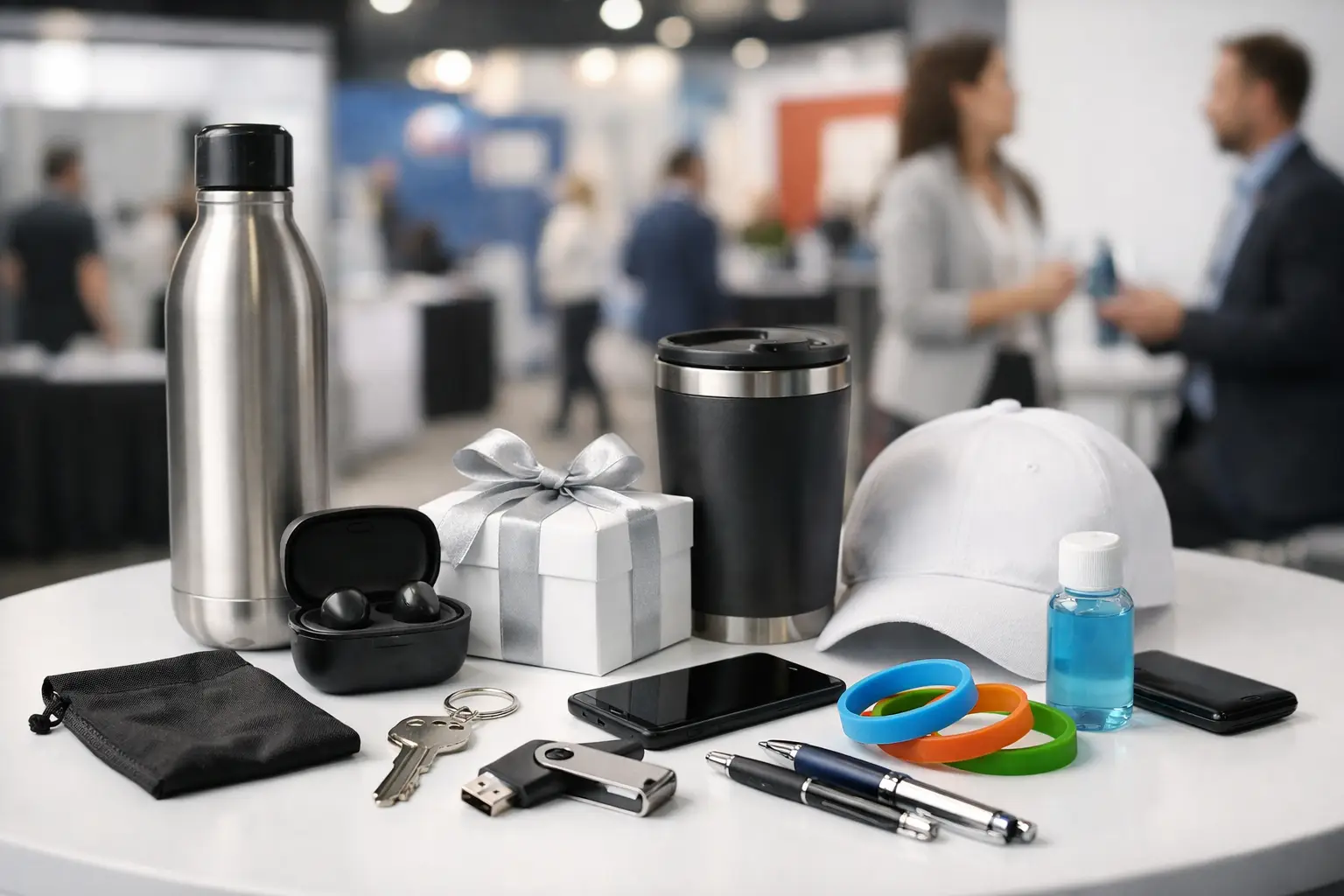
A crowded expo floor tells the truth fast. If your giveaway is forgettable, it gets tossed before your sales team finishes the first follow-up email. The best trade show booth giveaways do more than attract a quick handout line – they help people remember your company, keep your brand visible, and create a smoother path to real conversations after the event.
That means the right giveaway is not always the cheapest item you can order in bulk, and it is not always the flashiest. It needs to fit your audience, your sales cycle, your booth traffic, and your brand. A lender, contractor, software company, and medical practice should not all be giving away the exact same item just because it was popular at the last event.
What makes the best trade show booth giveaways work
A good giveaway does one of three jobs well. It gets used often, it solves a small problem, or it creates enough perceived value that people keep it. The strongest items usually do at least two.
Use matters because repeated exposure builds recall. If someone takes your branded charger home and uses it twice a week, that has more long-term value than a novelty item that looked fun for ten seconds at the booth. Utility matters because trade show attendees are already carrying too much. If your giveaway helps them stay organized, comfortable, charged, hydrated, or prepared, it earns its place.
Brand fit matters too. A premium financial service handing out flimsy trinkets sends the wrong message. On the other hand, a local business trying to stretch budget across several regional shows may be better served by practical mid-range items than by a tiny batch of expensive gifts. The goal is not just attention. The goal is attention that supports credibility.
12 best trade show booth giveaways to consider
1. Branded tote bags
Tote bags remain one of the best trade show booth giveaways because attendees use them immediately. That gives your logo visibility on the show floor, and it helps visitors carry everything else they collect. If the bag is sturdy and the design looks polished, it often gets reused after the event.
The trade-off is quality. Thin bags feel disposable and can make your brand look cheap. If you choose totes, make sure the material, print quality, and handle strength match the image you want to project.
2. Phone chargers or power banks
This category works because it solves a real problem at almost every event. People run low on battery, and a charger feels useful right away. For B2B audiences, that utility can make your company memorable long after the show ends.
They do cost more than pens or stress balls, so they are often better as a qualified lead gift rather than a grab-and-go item for everyone. If your average customer value is high, that math can make sense.
3. Quality pens
Pens are common for a reason. They are affordable, easy to distribute, and still useful. The key word is quality. A smooth-writing pen with a comfortable grip stays on desks and in bags. A cheap pen that skips ink gets tossed.
This is one of the safest options for companies attending multiple events with mixed audiences. It is not the most exciting choice, but it can still be effective if the design looks clean and professional.
4. Notebooks or jotters
A branded notebook pairs well with trade shows because people are already taking notes, collecting contacts, and tracking sessions. It also gives you more room for thoughtful branding than many smaller items do.
For professional service firms, real estate teams, lenders, developers, and B2B companies, notebooks often feel more aligned with the audience than novelty products. If you want your booth to look polished and business-focused, this is a smart category.
5. Reusable water bottles
Water bottles have strong staying power when they are well made and visually appealing. They support health, travel, work, and everyday use, which gives your brand repeated exposure. They also tend to have a higher perceived value than low-cost desk items.
Size and shipping can be a factor, though. They take up booth space and can add cost to transportation and setup. They work best when event logistics and budget can support them.
6. Lip balm or hand sanitizer
These small practical items continue to perform well because people actually use them. They are especially effective at busy events where attendees are shaking hands, traveling, and spending long hours in convention spaces.
They are not the most premium giveaways, but they can be very smart for healthcare, service businesses, hospitality, and community-facing brands. Utility often beats novelty.
7. Webcam covers
Webcam covers are inexpensive, easy to pack, and tied to a clear everyday use case. They also connect nicely to themes of privacy, security, and modern work, which makes them a strong fit for tech, finance, and business services.
This is a good example of a small item that can still feel relevant when the branding and messaging are handled well. It is simple, but it is not random.
8. Microfiber screen cloths
Screen cloths are light, affordable, and easy to distribute in volume. They are useful for laptops, tablets, glasses, and phone screens, so they tend to stick around longer than many low-cost items.
These are especially effective when paired with clean, minimal branding. Too much print can make a practical item feel cluttered.
9. Travel mugs
Travel mugs sit in that sweet spot between practical and premium. If your audience spends time commuting, traveling, or working from the office, they can generate repeated brand visibility over months or even years.
As with tote bags and water bottles, the downside is quality pressure. If the lid leaks or the insulation is weak, the item works against you. Product selection matters here.
10. Desk organizers or phone stands
Work-from-home and hybrid work have made desk items more useful again. A simple phone stand or compact desk organizer can stay visible every day, especially for B2B prospects.
This category works well when your brand serves professionals who spend a lot of time at a desk. It may be less effective for audiences that are more mobile or field-based.
11. Mints or snack packs
Edible giveaways are not always memorable, but they can be effective traffic builders. A bowl of branded mints or individually packaged snacks gives attendees an easy reason to pause at your booth.
These work best as a conversation starter, not as your only giveaway strategy. Since they disappear quickly, pair them with a more lasting item if lead quality matters.
12. Tiered giveaway bundles
Sometimes the best trade show booth giveaways are not a single item at all. A tiered approach lets you match cost to opportunity. You might offer a low-cost item for general traffic, a mid-tier item for booked demos, and a premium gift for high-value prospects.
This helps control budget while giving your team a better reason to engage. It also prevents expensive products from walking away with people who were never a fit.
How to choose the right giveaway for your audience
Start with the type of buyer you want to attract, not the product catalog. If you serve local homeowners at community expos, practical household items may beat office gear. If you sell to professionals, desk and travel items usually perform better. If your sales cycle is long and your average deal size is high, a more premium giveaway can be justified because the return from one new customer may cover the entire event.
You should also think about booth behavior. Are you trying to create foot traffic, reward qualified conversations, or support post-show recall? Those are three different jobs. The item that gets people to stop is not always the same item that helps your brand stay top of mind.
Brand consistency matters here more than many businesses realize. Your booth display, printed materials, staff apparel, and giveaway should look like they came from the same company. When they do, your business appears more established and more trustworthy. When they do not, the whole experience feels pieced together.
Common giveaway mistakes that waste budget
The biggest mistake is buying based on price alone. Low unit cost can look smart on paper, but if the item gets trashed right away, it is not actually saving you money. It is just cheaper waste.
Another mistake is choosing something trendy that has no connection to your audience. A gimmick may get a laugh, but it rarely builds real recall unless it is tied to your brand in a smart way. There is also the logistics problem. Oversized, fragile, or poorly packed giveaways can create shipping headaches and booth setup issues that are not worth the trouble.
One more issue is weak branding. If your logo is too small, unreadable, or placed on a low-visibility part of the item, you lose the benefit. If it is too large or visually messy, the product feels promotional in the worst way. Good design is what turns a giveaway into a brand asset.
Why the best trade show booth giveaways are part of a bigger system
Giveaways work better when they are tied to the rest of your event strategy. That includes booth graphics, business cards, printed leave-behinds, landing pages, and follow-up emails. A strong item can get attention, but it cannot fix mixed messaging or inconsistent presentation.
That is why many businesses get better results when the design, print, display, and promotional pieces are planned together. A giveaway should not feel like an afterthought. It should support the same message your booth is sending and the same impression your team wants to leave.
If you are investing in a trade show, make the giveaway earn its spot. Choose something useful, well-designed, and aligned with your audience. The right product does not just fill a swag bowl. It helps your brand stay in the room after the event is over.