If you are ordering 250 business cards for a new hire, your print choice should not look the same as a 25,000-piece postcard campaign. That is where offset printing vs digital printing becomes a practical business decision, not a technical one. The right method affects your budget, timeline, color consistency, and how polished your brand looks when materials hit a customer’s hands.
For most businesses, the real question is not which method is better in general. It is which one is better for this job, this quantity, this deadline, and this brand standard. Once you look at it that way, the decision gets much easier.
Offset printing vs digital printing: the core difference
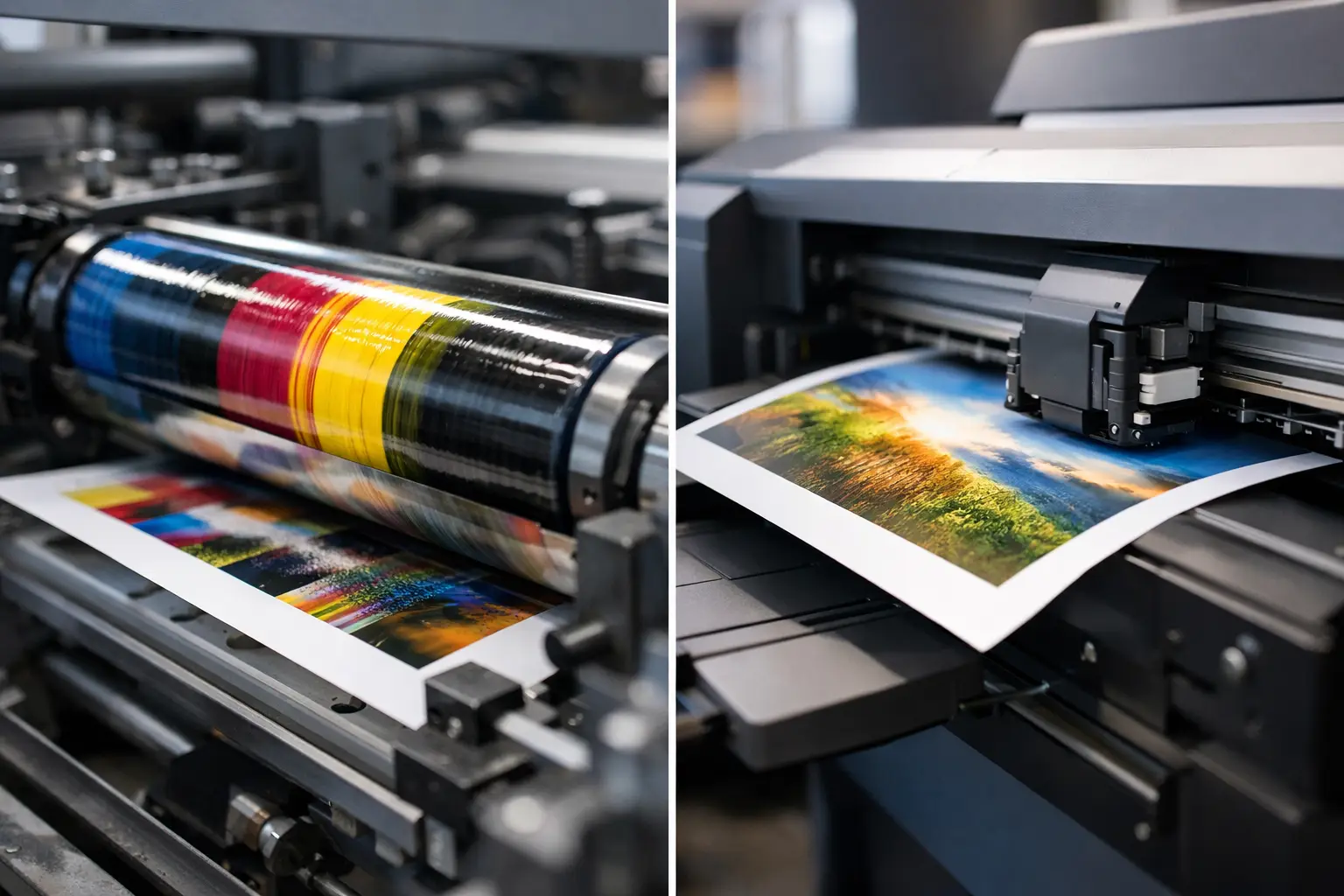
Offset printing uses metal plates and a traditional press process to transfer ink onto paper. It takes more setup at the start, but it becomes very efficient as quantities go up. This is the method often used for large runs of brochures, magazines, catalogs, direct mail, and other pieces where consistency matters across thousands of copies.
Digital printing does not require plates. Files are sent directly to the printer, which makes setup faster and more flexible. It is commonly used for shorter runs, quick-turn marketing pieces, event materials, business cards, flyers, and projects that may need variable data like names, addresses, or custom offers.
That setup difference drives almost every trade-off between the two. Offset usually wins on unit cost at high volume and can offer very precise color control. Digital usually wins on speed, lower minimums, and the ability to make changes without restarting an expensive setup process.
When digital printing makes more sense
Digital printing is often the smarter move when speed matters and quantities are modest. If you need 100 flyers for a local event this week, or 200 presentation folders after a last-minute update to your services, digital keeps the process moving. There is less prep, less waiting, and less risk of paying for setup that only supports a small run.
It also works well when your materials change often. Maybe your sales sheet needs a pricing update every quarter. Maybe your real estate team rotates agent information regularly. Maybe your postcard campaign includes personalized names or different offers by neighborhood. Digital printing handles those shifts without turning every revision into a costly production headache.
For small and mid-sized businesses, that flexibility matters more than people think. A lot of print waste comes from ordering too much too early, then watching details change. Digital helps you stay lean. You can print what you need now, keep messaging current, and avoid stacking outdated materials in a storage room.
Digital is also a strong option when testing marketing. If you are trying two postcard designs, three flyer offers, or a new handout for a trade show, a shorter run lets you learn before committing to a large volume. That can save money and improve results at the same time.
When offset printing is the better investment
Offset printing starts making more sense when quantity climbs and quality control becomes a higher priority. The upfront setup is higher, but once the press is running, the per-piece cost drops. If you need thousands of brochures, postcards, or inserts, offset can deliver better value over the full run.
This matters for businesses with steady marketing needs. If you already know you will use 10,000 postcards over the next quarter, or you need a large batch of sales collateral for multiple locations, offset can lower your cost per piece and create more consistency from the first sheet to the last.
Offset is also a strong fit for brands that are particular about color. If your logo color needs to match tightly across brochures, folders, presentation pieces, and other printed assets, offset gives more control. That is especially useful when brand standards are strict or when printed materials need to align closely with established identity guidelines.
Paper options and specialty finishes can also tilt a project toward offset. While digital printing has improved a lot, some premium stocks, exact ink matching needs, and specialty applications still perform better on an offset press. If your printed piece is meant to communicate a high-end brand image, those details can matter.
Cost is not just about the quote
A lot of businesses compare print methods by looking at the initial price alone. That is understandable, but it is incomplete.
Digital printing usually has a lower entry cost because there are no plates and less setup. For short runs, that often makes it the clear winner. But if you keep reordering the same piece in small batches, the total spend can eventually exceed what a larger offset run would have cost upfront.
Offset printing can look expensive at first because of setup charges, but it often becomes more economical at scale. The break-even point depends on the piece, paper, quantity, and finishing requirements. There is no universal number. A postcard run behaves differently than a premium booklet or folded brochure.
The bigger cost issue is waste. Printing too many pieces you never use is expensive, no matter how good the unit price looked. Printing too few and having to reorder repeatedly can also chip away at your budget. The best decision balances production cost with realistic usage.
Print quality and brand perception
Most customers will not ask whether a piece was printed digitally or on an offset press. They will notice whether it feels polished, clear, and consistent with your brand.
That said, there are differences. Offset printing is known for sharp image reproduction, smooth solids, and strong color consistency over long runs. It is often the best choice when exact brand color matters or when a premium finish is part of the goal.
Digital printing has come a long way and can produce excellent results for a wide range of business materials. For many everyday applications, the quality is more than sufficient. Business cards, flyers, postcards, rack cards, and sales sheets can all look professional and effective when designed well and printed on the right equipment.
What hurts brand perception most is not choosing digital over offset. It is choosing the wrong process for the project, using inconsistent artwork, or rushing production without checking details. Good design, clean files, and smart production planning usually have a bigger impact than the print method alone.
Speed, deadlines, and last-minute changes
If your team works in the real world, not a perfect one, deadlines move. Event dates shift. Staff changes happen. Offers get updated. Addresses get corrected. That is why turnaround time should be part of the print conversation from the start.
Digital printing is typically faster because it removes the plate-making and setup stages required by offset. That makes it ideal for time-sensitive jobs, especially when revisions are likely. If your materials are still being finalized or approvals are coming in late, digital gives you more room to adapt.
Offset requires more planning, and that is not a flaw. It is simply better suited to projects that are stable, approved, and ready for volume. When the details are locked in, offset rewards that preparation with efficiency and consistency.
How to choose the right print method
The easiest way to decide is to ask a few practical questions. How many pieces do you actually need? How quickly do you need them? Are the contents likely to change? Does the piece require exact brand color matching? Is this a one-time job, a recurring campaign, or a test run?
If your answer points to lower quantities, faster turnarounds, or frequent updates, digital printing is probably the better fit. If your project involves high volume, stable content, and tighter color demands, offset printing is often the stronger choice.
This is where working with one experienced partner helps. Instead of guessing, you can match the design, quantity, paper, finish, and production method to the actual goal of the piece. That keeps costs under control and reduces the kind of mistakes that happen when design and print are handled in separate places.
At Echo Brand Geeks, that practical approach matters because print is rarely a standalone item. It is usually part of a larger brand system that includes signage, direct mail, trade show pieces, promotional products, and digital marketing. Choosing the right print method is not just about ink on paper. It is about making sure every customer touchpoint looks professional and works together.
The best print decision is usually the one that supports how your business actually operates. If you want fewer delays, better brand consistency, and less wasted spend, start with the purpose of the piece and let the process follow from there.